
Lateral CanthoplastyLateral Canthoplasty
This is a surgery that extends the outer corner of the eye when the horizontal length of the eye is short. When the horizontal length of the eye is short and the eye tail is raised, performing lower lateral canthoplasty together with lateral canthoplasty can achieve a much more dramatic effect.
Nana Plastic Surgery's Lateral Canthoplasty
What makes Nana Plastic Surgery's lateral canthoplasty different? Lateral canthoplasty is performed for individuals who have small-looking eyes or upward-slanting outer corners and wish to make their eyes appear larger or create a softer, more balanced eye shape. By extending the outer corners, the eyes can appear wider while the outer corners can be lowered for a gentler appearance. Because the results of lateral canthoplasty can vary depending on each individual’s eye structure and skin condition, a thorough consultation before surgery is essential to determine the most appropriate surgical approach.
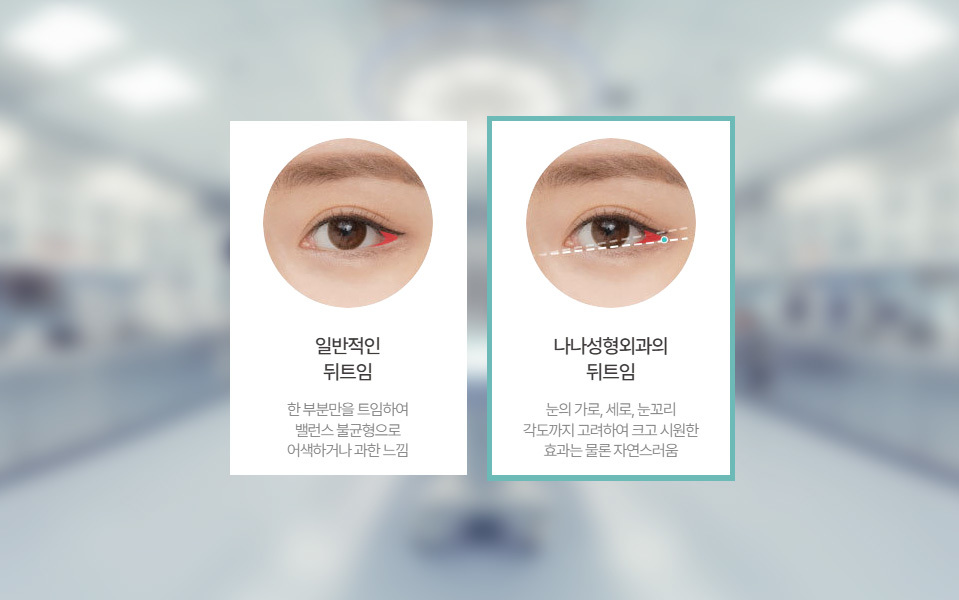
Nana Plastic Surgery's Lateral Canthoplasty
Lateral canthoplasty that maintains its original appearance without adhesion concerns With conventional lateral canthoplasty, the skin at the outer corner was typically incised and separated, but the dissected area could reattach during the healing process, limiting the long-term effect. NANA’s lateral canthoplasty minimizes factors that may contribute to reattachment during the surgical process, allowing for a natural, soft almond-shaped eye contour with a more gentle appearance.
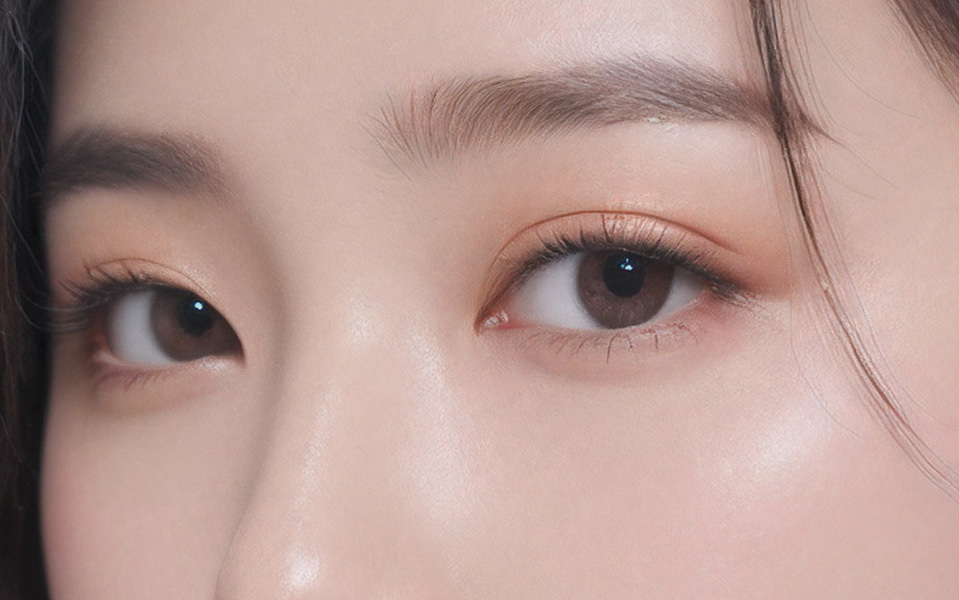
Nana Plastic Surgery's Lateral Canthoplasty
Quick recovery with micro-incisions without scar concerns In conventional procedures, scars could remain visible because the incision was made directly at the outer corner of the eye. With NANA’s lateral canthoplasty, a 1–2 mm micro-incision is made along the natural crease of the outer corner, and the inner conjunctival area is sutured so that the scar is not externally visible. In addition, the angle of the incision line can be adjusted to achieve the desired eye shape and overall appearance.


Nana Plastic Surgery's Lateral Canthoplasty Surgical Method
After making an incision considering the shape and height of the eye corner, the eye corner ligament and surrounding tissues are repositioned and firmly fixed to the inner periosteum to create a bright and soft eye shape.
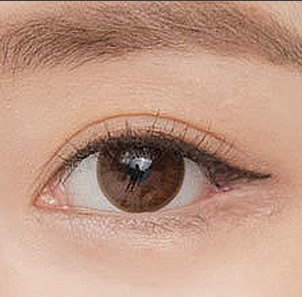
01
A customized line is designed according to each individual's characteristics and preferences.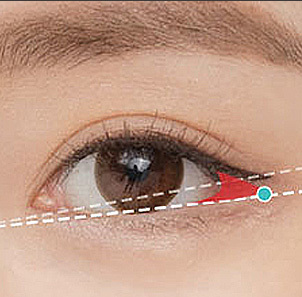
02
A 1-2mm incision is made along the angle of the designed back of the eye corner.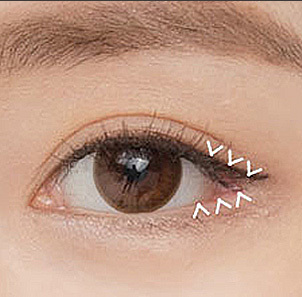
03
The eye corner incision area is firmly and securely fixed to the periosteum.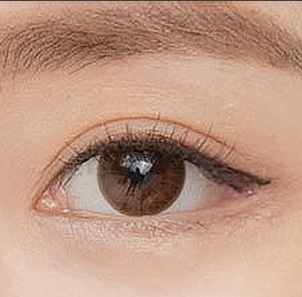
04
Suturing is performed so scars are not visible, creating a natural and distinct eye corner.



Nana Plastic Surgery's
Cases Where Lateral Canthoplasty Is Needed
- 01.
When you desire large and bright eyesWhen you desire large and bright eyes
- 02.
When the eye length is short and appears tiredWhen the eye length is short and appears tired
- 03.
When the distance between the eyes is too close for medial canthoplastyWhen the distance between the eyes is too close for medial canthoplasty
- 04.
Cases where the outer corner of the eye is raised, making the expression appear sharpCases where the outer corner of the eye is raised, making the expression appear sharp
- 05.
Cases where anterior canthoplasty alone is not satisfactoryCases where anterior canthoplasty alone is not satisfactory
- 06.
Cases where scarring remains and revision surgery is desiredCases where scarring remains and revision surgery is desired
Posterior Canthoplasty Surgery Information

Surgery Time
30 minutes
Anesthesia Method
Local/Sleep anesthesia
Hospitalization Required
None
Suture Removal
None
Return to Daily Activities
Immediate
Follow-up Visits Required
None
Nana Plastic Surgery Why Posterior Canthoplasty is Special
Beautiful eyes that perfectly suit your face - Nana Plastic Surgery's Posterior Canthoplasty Expertise

Minimal scars and lower lashes remain intact
We preserve the lower lashes by incising the inner conjunctiva rather than simply incising the skin.
Differentiated outer corner angle adjustment
High satisfaction is achieved because the outer corner angle can be adjusted to your preference.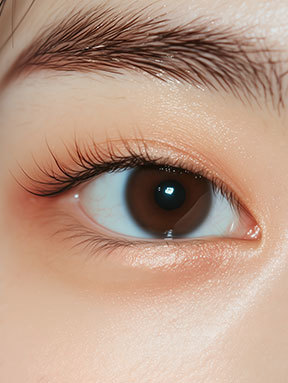
Considering eye size, line, and depth simultaneously
Enlargement of 5-7mm on average is possible, and it appears natural with fixation point adjustment.
Minimizing scars after surgery
Incision of the inner conjunctiva results in minimal scarring and faster recovery.
Eliminating factors for recurrence
We eliminate recurrence factors that cause skin adhesion to prevent adhesion.
A Natural Look That Never Looks Overdone
By suturing with fine threads, we create an eye appearance that is unnoticeable even after surgery.
Q & A answered by Nana Plastic Surgery

What are the effects you can see with lateral canthoplasty?
Nana Plastic Surgery's lateral canthoplasty takes into consideration the vertical, horizontal, and angle of the eye tail respectively to move it, allowing you to see the effects of lateral canthoplasty, lower blepharoplasty, and lowering the eye tail at the same time.
Additionally, the area around the temple is reduced after surgery, creating an effect that makes the overall facial contour appear smaller.
Is it really true that lateral canthoplasty can re-adhere?
Simply incising and suturing only the outer skin can result in the tissue adhering again over time.
Therefore, Nana Plastic Surgery adheres to the periosteal fixation method to prevent the tissue from re-adhering or the eye tail from rising even after time passes.
Nana Plastic Surgery's Lateral Canthoplasty
One-day procedure
We correct your eye shape with customized design tailored to your face more accurately and delicately.
01
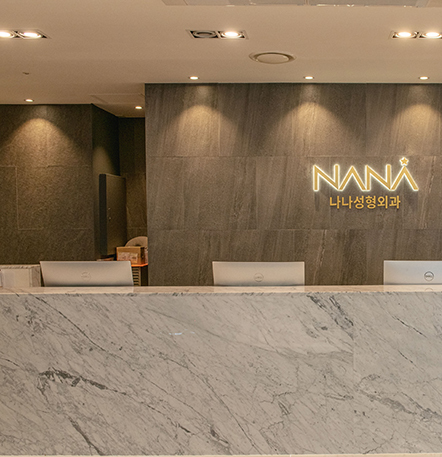
Visit Nana Plastic Surgery
02
Consult with an eye surgery specialist and design the line

03
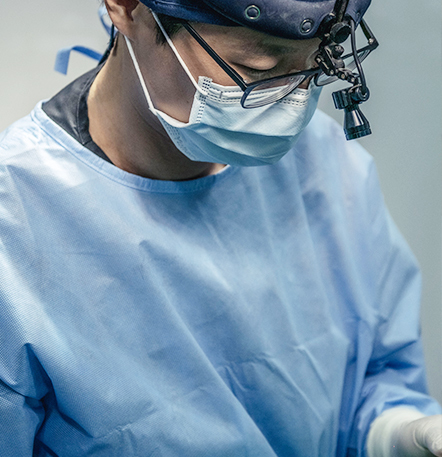
Perform surgery for approximately 30 minutes
04
Return to daily life immediately after discharge (contact lens wear, face cleansing, and makeup are possible)

Nana Plastic Surgery's Reliable Safe Surgery System

Personalized Eye Surgery
Nana Plastic Surgery we carefully consider individual eye condition and shape, facial harmony, and personal preferences to create a customized design. By minimizing imperfections and enhancing each person’s unique strengths, we strive to create the most ideal and harmonious eye shape for you.
Operating Room Name Disclosure System
Nana Plastic Surgery implements an operating room name disclosure system to transparently reveal the real name of the surgical director, and makes efforts to prevent potential medical accidents and provide post-operative care for patients.

Naturally Large and Beautiful Eyes
Nana Plastic Surgery we strive to create eyes that are not only large and beautiful, but also naturally harmonious with your overall appearance. With the expertise and experience of our skilled specialists, we enhance the size and beauty of the eyes while minimizing visible scarring and creating a natural eye shape that complements your individual facial proportions.
Dedicated Physician System
Nana Plastic Surgery tailors the characteristics of each individual, with the attending physician in charge from consultation to surgery to post-operative care, striving to achieve safer and higher quality surgical results.


Post-operative Care
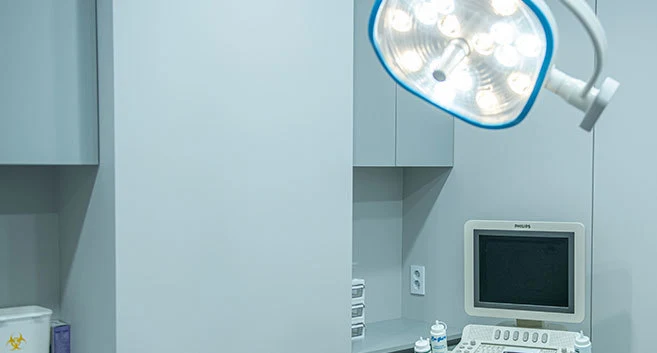
Nana Plastic Surgery is equipped with professional safety systems inside and outside the operating room such as safe anesthesia system and power backup system, prioritizing safety first. Additionally, we operate a care center that includes post-operative recovery management systems and swelling management systems.
Precautions after eye surgery
advised by Nana
01
Face Cleansing and Showering/Makeup
Hair washing and showering are possible from the day after surgery, but be careful not to get water on the wound.Be careful as forcing the eye can cause pooled blood to flow. Eye makeup and contact lens wear are possible after 4 weeks. To prevent double eyelids from loosening or changing shape, avoid eye makeup for one month, and contact lens wear is possible after one month as they can irritate the conjunctiva.
02
Progress
Conjunctival swelling or redness may occur after surgery.Conjunctival swelling (a symptom where the conjunctiva appears white and puffy) or redness may occur after surgery. These symptoms naturally absorb over 2-4 weeks and are general symptoms that can occur after surgery, so there's no need to worry. Additionally, temporarily increased tears and eye discharge can also appear as a general reaction after surgery and will improve over time.
03
Swelling Management
Swelling reduces over 3-6 months after surgery.It is common for swelling to appear asymmetrical as each side swells differently or reduces at different rates. The asymmetrical swelling appearance will improve over time until all swelling is completely resolved.
Apply hot and cold compresses at appropriate times after surgery.Cold compress is recommended for the first 3 days when facial swelling occurs after surgery. It helps prevent bleeding and reduce swelling. From day 4 onwards after surgery, warm compress is recommended for effective swelling and bruise management.
04
Wound Care
Manage with eye ointment and eye drops.Apply a thin layer of ophthalmic ointment to the surgical area twice a day, in the morning and evening, using a clean cotton swab each time.
If you have been prescribed eye drops, apply them to the conjunctiva 2–3 times a day as directed.
Milia may develop along the incision line after surgery. Small, white, grain-like bumps may appear along the incision line, but they usually disappear naturally over time. However, if the milia persist for more than three months, please visit the clinic for an evaluation. Depending on the condition, they can be easily removed with a simple procedure.05
Alcohol and Smoking
Avoid alcohol and smoking for 1 month after surgery.We recommend avoiding alcohol and smoking for one month after surgery, as they may increase the risk of bleeding, delay wound healing, and increase the risk of infection.
06
Sleep Position
Check your sleep position for 3 months after surgery.For the first week after surgery, keep your head elevated above your heart while sleeping and avoid bending your neck. Sleeping with your upper body elevated can help reduce swelling more quickly.
Please avoid sleeping on your side or stomach. Instead, sleep on your back with your face directed toward the ceiling.

Burial Method

Partial Incision Method

Under-Eye Fat Repositioning

Incisional Ptosis Correction

Revision Eye Surgery