
Lateral Canthopexylateral canthus
Lateral canthopexy completes youthful-looking eyes — with maximum lateral extension and adjustment of the outer corner angle as you wish, it can change your impression.
Lateral canthopexy at NANA Plastic Surgery
What is NANA lateral canthopexy? Lateral canthopexy is NANA Plastic Surgery's specialized outer corner surgery: along with lateral canthoplasty, it adjusts the angle of the outer corners and fixes them to the periosteum, maximally extending the horizontal length of the eyes while changing the shape of the outer corners. Unlike ordinary lateral canthoplasty, there is no re-adhesion, and the outer corners can be lowered to give a softer impression.

Lateral canthopexy at NANA Plastic Surgery
Beauty determined by the difference in delicacyEven if the eyes are relatively small, a longer horizontal eye shape can create a more open and less confined appearance. However, when the eyes are both small and short in length, they may appear more closed-off or narrow.
For this type of eye shape, achieving a bright and open look through double eyelid surgery alone can be challenging. In such cases, lateral canthoplasty can help lengthen the outer corners of the eyes, making them appear larger, more open, and more defined.

Lateral canthopexy surgical method at NANA Plastic Surgery
Beyond the Limits of Conventional Lateral Canthoplasty — For a More Open, Defined Look
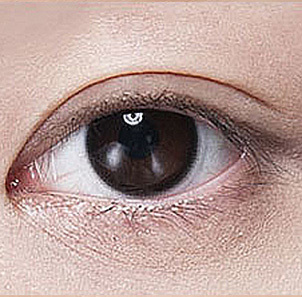
01
A design is made between the outer corner and the lateral orbital bone for maximum lateral extension and adjustment of the outer corner angle.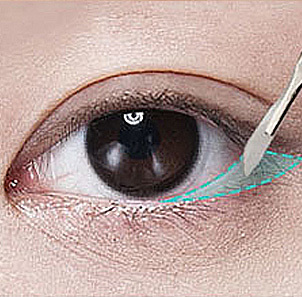
02
The outer corner area is incised and excess skin and tissue are removed.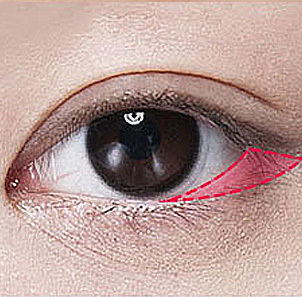
03
The lateral canthal area is delicately dissected to expose the periosteum of the lateral orbital bone.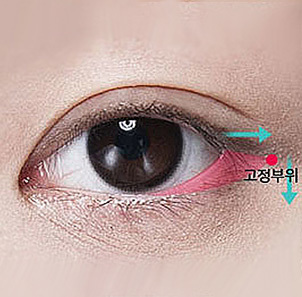
04
The tarsal plate at the outer corner is fixed to the exposed periosteum, adjusting the angle and length of the outer corner at this stage.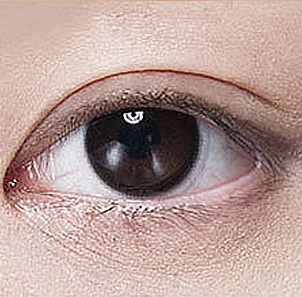
05
The conjunctiva and skin at the outer corner are sutured.



When
lateral canthopexy is needed at NANA Plastic Surgery
- 01.
When the horizontal length of the eyes is short and the outer corners are upturnedLateral canthopexy is needed when the horizontal length of the eyes is short and the outer corners are upturned.
- 02.
When you are worried about re-adhesion after lateral canthoplastyIf you are worried about the re-adhesion that occurs with ordinary lateral canthoplasty, lateral canthopexy can be performed safely.
- 03.
When simple lateral canthoplasty did not produce resultsIf you did not see satisfying results from simple lateral canthoplasty, lateral canthopexy can help.
- 04.
When you want to change the shape of the outer cornersIf you want to change the angle and shape of the outer corners to the form you want, this can be adjusted with lateral canthopexy.
- 05.
When you want eyes that look definitely longerIf you want eyes that look definitely longer, lateral canthopexy can maximally extend the horizontal length of the eyes.
Lateral Canthopexy Surgery Information

Surgery Time
30 minutes
Anesthesia
Sedation (IV) anesthesia
Hospitalization
Not required
Stitch Removal
After 7 days
Return to Daily Life
After 3–5 days
Follow-up Visits
1 visit
Advantages of lateral canthopexy at NANA Plastic Surgery
With NANA Plastic Surgery's own special expertise, we find the eye shape that suits each individual.

Inconspicuous scars
Scars are barely visible.
The eyes you want
The angle can be adjusted according to each individual's eye shape.
Harmonious eyes
Natural eyes that suit your proportions are completed.
Safe surgery
There are almost no side effects.
Q & A answered by NANA Plastic Surgery

Is lateral canthopexy essential during lower blepharoplasty?
If the lower eyelid is severely loose and the eyeball is protruding,
ectropion may occur as a side effect of lower blepharoplasty.
In such cases, lateral canthopexy can be performed together with
the surgery to prevent ectropion, and apart from lower blepharoplasty,
it is also performed to treat ectropion that has already developed.
NANA Plastic Surgery's lateral canthopexy
One-day surgery, done in a single day
A 30-minute surgery — same-day surgery and discharge without hospitalization
01
Visit NANA Plastic Surgery.
02
Consult with an eye surgery specialist and design the line

03
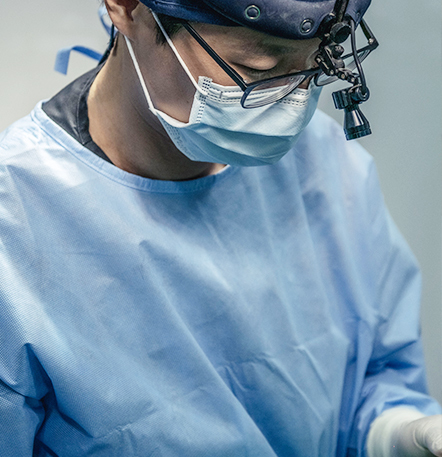
Surgery is performed for about 30 minutes
04
Return to daily life after 3–5 days of rest following discharge

NANA Plastic Surgery's Trusted Safe Surgery System

Personalized eye surgery
At NANA Plastic Surgery, we design with each individual's eye condition and shape, harmony with the face, and preferences in mind, minimizing drawbacks and bringing out only the strengths to create the most ideal eyes.
Surgeon Identification System
At NANA Plastic Surgery, we implement a Surgeon Identification System that transparently discloses the name of the surgeon performing each procedure. We are committed to prioritizing patient safety by taking measures to help prevent potential medical incidents and providing thorough post-operative care throughout the recovery process.
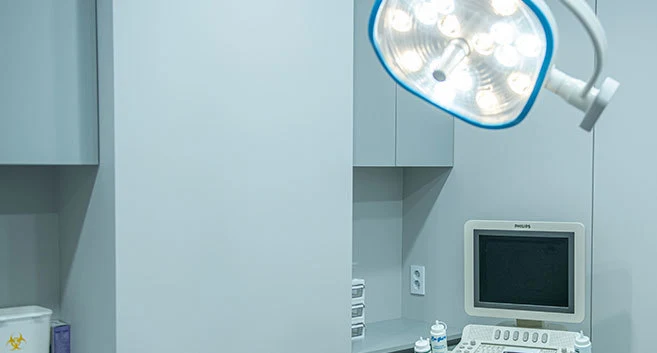

Naturally large, beautiful eyes
NANA Plastic Surgery pursues eyes that are large and beautiful yet natural. With the expertise of experienced specialists, we create eyes that are not only large and beautiful but also have minimal scarring and look natural in proportion to your face.
Dedicated care system
At NANA Plastic Surgery, the surgeon in charge takes responsibility from consultation through surgery and follow-up care, tailored to each individual's characteristics, striving for safer, more polished surgical results.


Post-surgery care
At NANA Plastic Surgery, patient safety is our top priority. Our surgical facilities are equipped with specialized safety systems, including a comprehensive anesthesia safety system and an uninterrupted power supply system, both inside and outside the operating rooms.
We also operate a dedicated Care Center, providing comprehensive post-operative care such as recovery management and swelling care programs to support patients throughout their recovery.
NANA's guide to
precautions after eye surgery
01
Washing, showering & makeup
Washing your hair and showering are possible from the day after surgery, but be careful not to let water touch the wound.Please be careful, as straining your eyes may cause pooled blood to come out. Eye makeup and contact lenses are possible after 4 weeks. To prevent the double eyelid from loosening or changing shape, avoid eye makeup for one month, and contact lenses, which can irritate the conjunctiva, can be worn after one month.
02
Recovery
Conjunctival swelling or redness may occur after surgery.Conjunctival swelling (the conjunctiva appears white and swollen) or redness may occur after surgery. These symptoms resolve naturally within 2–4 weeks and are common after surgery, so there is no need to worry. A temporary increase in tearing or eye discharge is also a common reaction after surgery and improves over time.
03
Swelling care
Swelling subsides over 3–6 months after surgery.It is normal for swelling to appear asymmetrical, as the two sides may swell or subside differently. Any visible asymmetry from swelling improves over time until the swelling has fully subsided.
Apply warm/cold compresses at the appropriate times after surgery.Cold compresses are recommended for the first 3 days after surgery while the face is swollen. They help prevent bleeding and reduce swelling. From day 4 after surgery, warm compresses are recommended for effective management of swelling and bruising.
04
Wound care
Care for the area with eye ointment and eye drops.Apply a thin layer of eye ointment to the surgical site morning and evening using a clean cotton swab. If you were prescribed eye drops, apply them to the conjunctiva 2–3 times a day. Milia may form along the incision line after surgery. Small white milia the size of millet grains may form along the incision line after surgery, but they disappear naturally over time. However, if they have not disappeared after 3 months, they can be simply removed at the clinic depending on their condition.
05
Alcohol & smoking
Refrain from drinking alcohol and smoking for 1 month after surgery.Alcohol and smoking adversely affect bleeding, wound healing, and infection, so we recommend avoiding them for 1 month after surgery.
06
Sleeping position
Please check the recommended sleeping positions for 3 months after surgery.For the first week after surgery, avoid bending your neck while sleeping and keep your upper body elevated so your head is higher than your heart, which helps swelling subside faster. Also, do not sleep on your side or on your stomach; sleep facing the ceiling.

Burial Method

Partial Incision Method

Under-Eye Fat Repositioning

Incisional Ptosis Correction

Revision Eye Surgery