
Short NoseShort nose deformity
For cases where the nasal tip is upturned and nostrils are visible when viewed from the front, this surgical method extends the nasal length according to facial proportions to correct the deformity.
What is Nana Plastic Surgery's Short Nose Rhinoplasty?
A short nose, commonly referred to as an upturned nose, is characterized by an upward-turned nasal tip that may make the nostrils more visible. This appearance can be associated with underdeveloped nasal bones, a short septal cartilage, smaller nasal tip cartilages, and insufficient soft tissue around the nasal tip.
Short nose correction is considered one of the more technically challenging rhinoplasty procedures because it requires careful repositioning of the septal and nasal tip cartilages to achieve a nasal length that is well-proportioned to the face. In addition to extending the internal lining of the nose, the procedure may also require careful lengthening of the overlying skin and soft tissue.
What are the ideal lateral profile angles and nasal length we consider?
Ideally, the length of the nose should measure approximately one-third of the vertical length of the face. The ideal nasofrontal angle, formed between the forehead and the nose, is approximately 130°, while the nasolabial angle, formed between the nose and upper lip, is typically considered ideal at approximately 90°–95°.
When the nasolabial angle exceeds approximately 110°, the nose may appear excessively upturned, commonly referred to as an “upturned nose.”

Types of Cases Requiring Short Nose Surgery
Cases requiring short nose surgery are not limited to simply visible nostrils. There are cases where nasal length surgery is needed even when the nose is longer.

Type with short dorsal length
A nose where the dorsal length from the starting point to the nasal tip is short compared to the face
Type with large nasolabial angle
Cases where the nasolabial angle is large because the nasal tip is elevated despite a long dorsal length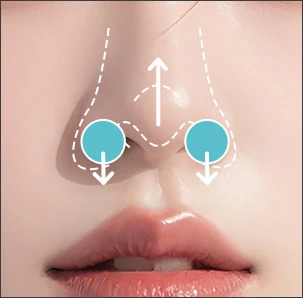
Type appearing like a pig nose
Cases where the nasal length is long but the ala is drooping and the columella is retracted, appearing like a pig nose

Short Nose
Surgical Method
- 01.
Pre-surgical 3D-CT ImagingBefore surgery, 3D-CT imaging is performed to accurately assess the internal nasal structure including width, asymmetry, and length.
- 02.
Tissue Dissection and Cartilage SeparationThe entire nasal tissue is extended to secure length, and the alar cartilage is separated from the dorsal cartilage.
- 03.
Septal Cartilage Extension GraftSeptal cartilage extension graft is inserted into the space created between the separated tissues.
- 04.
Alar Cartilage FixationThe alar cartilage is fixed to the septal extension cartilage to lower the cartilage while elevating the dorsum.
Short Nose Surgery Information

Surgery Time
1 hour
Anesthesia Method
Sleep Anesthesia
Hospitalization
None
Suture Removal
5-7 days after surgery
Return to Daily Life
Return to daily life after suture removal
Clinic Treatment
Approximately 2 clinic visits
Nana Plastic Surgery Short Nose Rhinoplasty Advantages
We extend the length of the nose without strain to the soft tissues and skin of the nose, lowering the lifted nasal tip downward to create a naturally beautiful angle.
Sufficient Dissection
We sufficiently dissect the cartilage, skin, and soft tissues, going through the process of lengthening the short skin to prevent recurrence.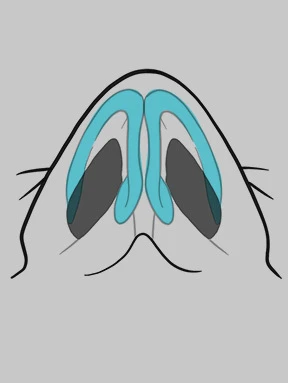
Strong Cartilage Support Structure
We create a strong cartilage support structure to lower the nasal tip cartilage, preventing the lifting phenomenon of the nasal tip.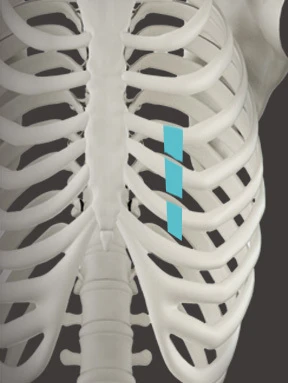
Appropriate Filler Selection
According to the patient's condition, we sufficiently harvest and use nasal septal cartilage, auricular cartilage, rib cartilage, etc.
Cartilage Structure Without Warping
We ensure that no excessive force is applied to the cartilage structure in any process, preventing the nose from becoming twisted.
Nana Plastic Surgery Q & A

I am considering surgery because of a bulbous nose. If the skin is thin, will the implant be very visible?
As you may be concerned, when the nasal skin is particularly thin, using an excessively high implant may make the implant visible through the skin or result in an unnatural appearance.
However, there are several ways to address this concern, such as using a lower-profile implant for a more natural result, harvesting and using the patient’s own dermal fat tissue as an alternative to an implant, or covering the implant with the patient’s own tissue, such as temporalis fascia, before placement.
With a thorough preoperative evaluation and careful consultation with a board-certified plastic surgeon, the most appropriate approach can be selected based on your individual nasal structure and soft-tissue condition, helping achieve a natural and satisfying result.
Nana Plastic Surgery's Trustworthy Nose Rhinoplasty System

Customized Rhinoplasty for Each Individual
Nana Plastic Surgery operates on the principle of customized rhinoplasty for each individual. We design based on each person's nasal condition and shape, harmony with the face, and personal preferences. We minimize drawbacks and maximize advantages to create the most ideal nose.
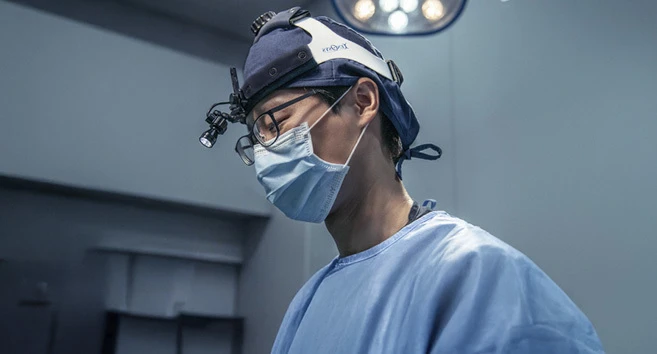
Operating Room Name System and Dedicated Responsibility System
We implement an operating room name system to honestly convey accurate medical staff information to customers, ensuring reliability. Additionally, from surgical planning, comprehensive examination confirmation, surgery, to post-operative care, all are managed on a 1:1 customized basis by designated medical staff.

Naturally Beautiful Nose
At Nana Plastic Surgery, surgery is performed with the expertise of skilled specialists to ensure that the nose, which becomes the center of the face, harmonizes with the forehead, cheekbones, eyes, chin, lips, and more.
Safe and Responsible Post-Operative Care
At NANA Plastic Surgery, patient safety is our highest priority. Our surgical facilities are equipped with specialized safety systems, including an advanced anesthesia safety system and an uninterrupted power supply system, both inside and outside the operating rooms.

Nana's Guide to
Precautions After Nose Surgery
01
Cleansing, Showering, and Makeup
Cleansing and makeup are possible starting the day after suture removal from the nasal bridge area.Before removing the splint and tape, wipe areas other than the surgical site with a damp cloth. Starting the day after suture removal from the nasal bridge area, cleansing and makeup are possible. When cleansing, please avoid rubbing the nose area forcefully and do not apply pressure. Glasses can be worn after one month, and please avoid saunas and jjimjilbangs for one month.
02
Post-operative Course
For 2-3 days after surgery, slight bleeding and nasal discharge may occur.For one month after surgery, please avoid blowing your nose forcefully. After one month has passed, it is possible to blow your nose gently.
When ear cartilage is used, there may be pain or sensory changes for up to 6 months.If ear cartilage is used during surgery, there may be pain or sensory changes when touched for up to 6 months. In general cases, pain and sensory abnormalities improve over time, so there is no need to worry.
03
Swelling Management
For one month after surgery, facial swelling remains.Swelling of the nose typically occurs asymmetrically, swelling unevenly on both sides or subsiding unevenly. The visible asymmetric swelling that remains until the swelling completely subsides will improve over time.
Please apply warm and cold compresses at appropriate times after surgery.Cold compresses are recommended for up to 3 days after surgery. They help prevent bleeding and reduce swelling. From 4 days after surgery onwards, warm compresses are recommended for effective swelling and bruising management.
04
Wound Care
Please visit the treatment room for dressing removal, splint removal, and suture removal.If gauze dressing is placed inside the nose or behind the ears when ear cartilage is used, please visit the treatment room on post-operative days 2-3 to remove the cotton and gauze and receive disinfection. The splint and suture removal are performed at the treatment room 6-7 days after surgery.
Manage with prescribed ointment.Twice daily, morning and evening after surgery, gently wipe the inside of the nose and the incision area with a cotton swab moistened with saline solution, then apply a thin layer of prescribed ointment.
05
Alcohol and Smoking
Avoid alcohol and smoking for one month after surgery.Alcohol and smoking negatively affect bleeding, wound healing, and infection, so abstinence is recommended for one month after surgery.
06
Sleep Position
Please check your sleep position for 3 months after surgery.For up to one week after surgery, ensure your neck is not bent while sleeping, and maintain your upper body elevated with your head higher than your heart, which helps reduce swelling faster. Also, do not sleep on your side or face down; sleep on your back with your face facing the ceiling.