
Forehead Reductionforehead reduction surgery
Forehead reduction is a surgery that reduces the length of the forehead by making a delicate incision along the hairline and pulling and fixing the scalp. A wide forehead is adjusted to suit facial proportions, and hair follicles are left at the incision site for a natural result.
What is forehead reduction at NANA Plastic Surgery?
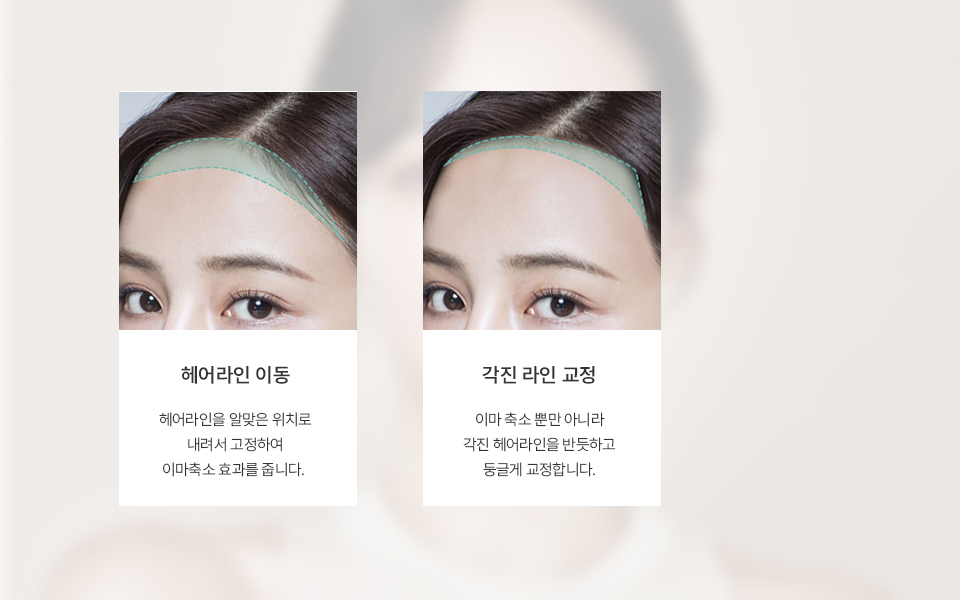
Forehead reduction is a surgery for a wide forehead with a high hairline, in which the hairline is moved downward to create an ideal forehead height. Unlike hair transplantation, there is no need to wait several months for hair to grow, and the face, which looked long and large because of the wide forehead, appears smaller.

Improving the side line of the forehead while keeping hair and fine hairs intact
Because the incision is made at an oblique angle to the hair follicles, follicle damage from surgery is very minimal, the surgical marks are inconspicuous, and the fine hairs on the forehead are appropriately left to create a natural hairline.
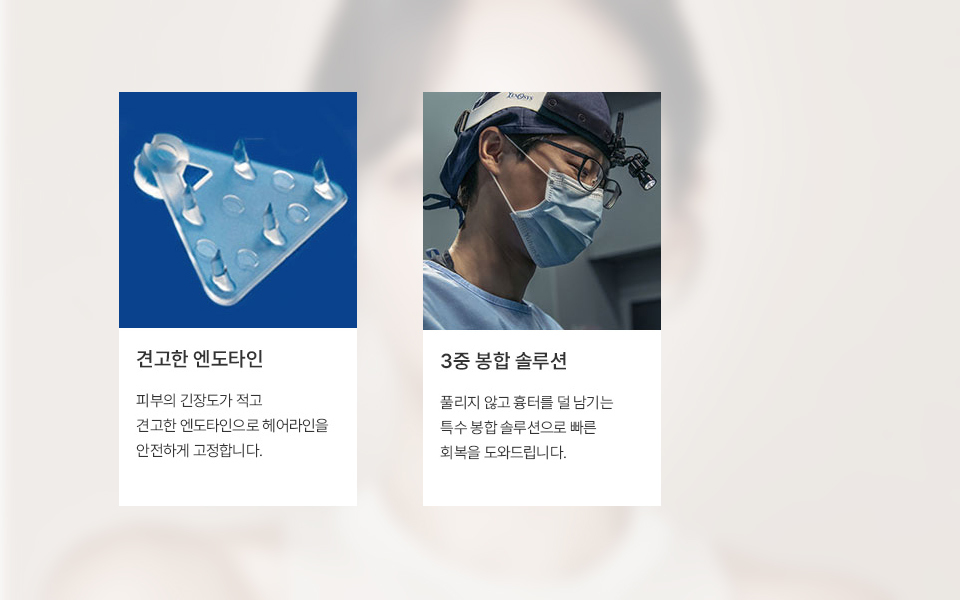
Forehead reduction — Endotine is the key!
Endotine is a safe, biocompatible soft-tissue fixation material approved by the FDA and KFDA; its five prongs pull the dissected skin tissue evenly and fix it firmly. It is also used to fix the forehead, eyebrows, and drooping eyelids after lifting, and it is used as the core of forehead reduction.

Forehead reduction surgical method at NANA Plastic Surgery
Because the forehead is reduced with consideration for the proportion it occupies in the face, it helps the upper, middle, and lower face achieve the golden ratio of 1:1:0.8.
01
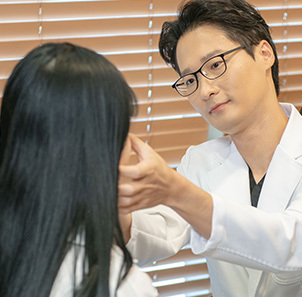
After thorough consultation before surgery, the incision position and the position of the corrected line are precisely designed.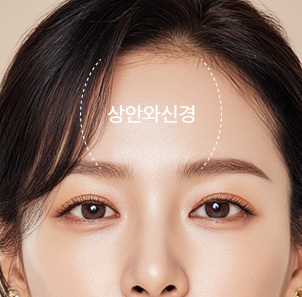
02
The incision is made diagonally to preserve the supraorbital nerve and minimize damage to hair follicles.
03
Endotine is inserted and fixed, the forehead is pulled toward the scalp, and the scalp is fixed by hooking it onto the prongs of the Endotine.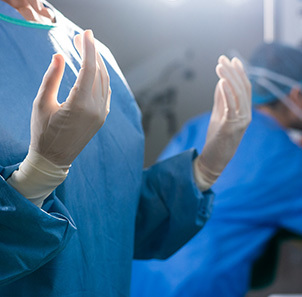
04
The incision is meticulously sutured and finished so that no scar is visible.



When forehead reduction is needed
- 01.
M-shaped or asymmetrical hairlineWhen the hairline is M-shaped or asymmetrical
- 02.
Noticeably wide, large foreheadWhen the forehead is noticeably wide and large
- 03.
Forehead wide at the sides or cheekbonesWhen the forehead is wide at the sides or cheekbones
- 04.
When the face looks longWhen the face looks long because of a wide forehead
- 05.
When contouring surgery feels burdensomeWhen contouring surgery feels burdensome
- 06.
Limitations of hair transplantationWhen you are afraid of hair transplantation or did not see results even after the procedure
Forehead Reduction Surgery Information

Surgery Time
About 1 hour
Anesthesia
General anesthesia
Hospitalization
Not required
Drain
None
Stitch Removal
After 9–10 days
Return to Daily Life
After 1 week
Follow-up Visits
1 week after surgery
NANA Plastic Surgery's own forehead reduction
We realize beauty through every possible method and technique. We select the most suitable surgical method considering the individual's bone, soft tissue, and skin type.

Corrected all at once
While reducing a wide, long forehead, an uneven or M-shaped hairline can be corrected at the same time.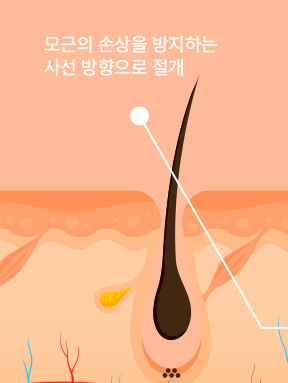
Follicle-preserving incision
The incision is made diagonally, taking into account the direction of hair growth, to avoid damage to hair follicles.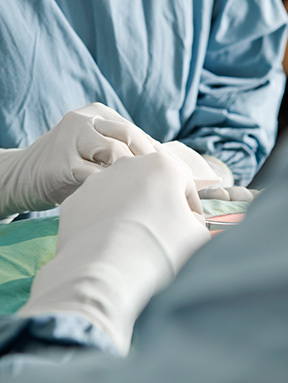
Minimized loss of sensation
Loss of scalp sensation is minimized by preserving the supraorbital nerve, which is responsible for scalp sensation.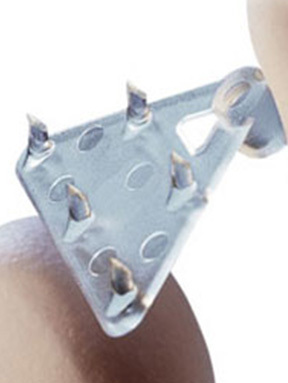
Stable fixation
Using certified Endotine, the scalp can be fixed naturally and in a balanced way.
Q & A answered by NANA Plastic Surgery

What exactly is Endotine?
Endotine is a safe, biocompatible soft-tissue fixation
material approved by the FDA and KFDA; its five prongs
pull the dissected skin tissue evenly and fix it firmly.
After a year, it naturally dissolves and is absorbed,
leaving no foreign-body sensation, and it also allows
semi-permanent skin elasticity.
How long does swelling last after surgery?
Forehead reduction does not cause much swelling, but for 1–2 weeks
there may be swelling extending to the center of the forehead.
Immediately after surgery, you can return to daily life right away
with a hairstyle that has bangs down. In addition, the incision
scar may look dark for up to 1 month after surgery, but by
3–6 months the color fades and it becomes barely visible.
NANA Plastic Surgery's Trusted Facial Contouring Expertise
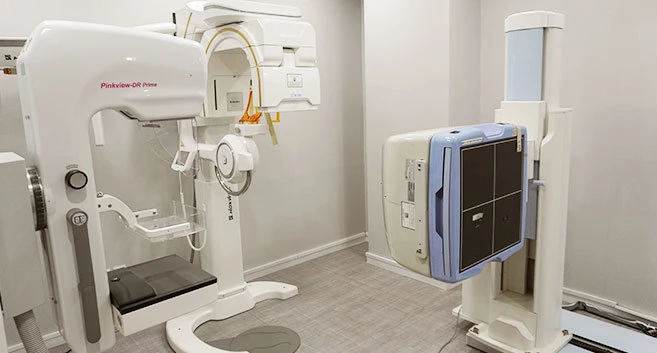
Precise pre-surgical analysis with 3D-CT
Through precise 3D-CT analysis before surgery, we examine from multiple angles the parts that are hard to confirm with the naked eye — each individual's facial bone structure and shape, the distribution of muscle layers and soft tissue, and the position of nerves — and design the surgery after considering every aspect.
Pre-surgical comprehensive examination system
A comprehensive examination using our medical equipment system before surgery makes safer surgery possible. Through disease-specific screening that includes some 50 nationally certified test items, we analyze each patient's health data, make a scientific diagnosis, and perform only the precise surgery suited to each individual, leading to more satisfying results.


Collaborative system of specialists in each field
Specialists in each field, with expertise honed over many years of plastic surgery experience, collaborate throughout the entire surgical process for safe and highly satisfying results. A dedicated facial contouring surgical team with extensive clinical experience takes responsibility for our patients' safety and beauty.
Board-certified anesthesiologist on site
The patient's condition is monitored in real time with a monitoring system, and a board-certified anesthesiologist is dedicated 1:1 to each patient, taking responsibility for safely checking the entire process from before surgery through post-operative recovery.

Facial contouring recovery care solution
NANA Plastic Surgery provides a total recovery care solution for stable, beautiful, optimal results after facial contouring surgery. Our swelling management program and treatment programs for rapid relief of swelling help you recover quickly and satisfactorily.
Facial contouring post-surgery recovery care solution
Post-operative care determines the results as much as the surgery itself. NANA provides a post-surgery recovery care solution for facial contouring patients.

In-house mask pack
An intensive care pack containing NANA Plastic Surgery's medical expertise forms a protective barrier on the skin, adding moisture and vitality.

Complimentary aftercare kit
Everyone who undergoes surgery receives an "aftercare kit" for fast recovery, swelling relief, and soothing.

Healite for skin tone improvement and skin regeneration
Supports cell recovery to reduce inflammation, restore damaged skin elasticity, and help improve redness.

RF treatment for lymphatic circulation and elasticity
An intensive care pack containing NANA Plastic Surgery's medical expertise forms a protective barrier on the skin, adding moisture and vitality.

Incision scar care
Scar care is provided when scar remodeling occurs as fibrous tissue is drawn in around the incision site.

Steam exfoliation care and hydrating cooling care
Stimulates collagen and elastin production in damaged skin tissue to restore the tissue and promote skin regeneration.

Lymphatic care and lifting/elasticity care
Promotes cell function to induce smooth metabolism and increases the collagen and elastin layers to enhance elasticity.

Anti-swelling and anti-inflammatory injections
Heals vascular constriction and tissue damage, promoting blood and lymphatic circulation to support fast recovery.

Close follow-up by your surgeon and dedicated care manager
Even after surgery, your surgeon and your assigned dedicated care manager personally check your post-operative progress.
Aftercare Program
NANA Plastic Surgery runs a diverse and systematic aftercare program.
Facial Contouring Aftercare Program
Week 1
Exfoliation care ▶ Mask care / Healite
Exfoliation care and hydrating care with a sheet mask boost cell regeneration and skin elasticity, and Healite improves skin tone.
Week 4
RF treatment ▶ Mask care / Healite ▶ Progress check by your surgeon
RF treatment reduces bruising and swelling, Healite boosts skin elasticity, and then your surgeon checks your progress.
NANA's guide to
precautions after facial contouring surgery
01
Washing & showering
Until the stitches are removed, please wipe areas other than the surgical site with a damp towel.Until the tape or stitches on your face are removed, please wipe areas other than the surgical site with a damp towel.
You may brush your teeth from the day after surgery.From the day after surgery, brush your teeth as usual but carefully with a small toothbrush. After intraoral incision surgery, gargle with the prescribed Hexamedine diluted at a ratio of 7 parts water to 3 parts Hexamedine. We recommend gargling after every meal, and rinsing your mouth gently at intervals of about 3–4 hours.
02
Recovery
Irritation or a strong impact to the surgical site may cause bleeding or hematoma.Irritating the surgical site or receiving a strong impact may cause bleeding or hematoma. Please avoid actions that put pressure on the face (straining during vomiting or bowel movements, coughing, sneezing, bending your head down, etc.).
There may be reduced sensation in the cheeks, lips, or teeth.There may be reduced sensation in the cheeks, lips, or teeth. However, this gradually improves over 1–2 months at the shortest and up to a year at the longest, so there is no need to worry.
03
Swelling care
After surgery, swelling or bruising may move downward and descend as far as below the neck.Swelling or residual tissue may look asymmetrical, but it returns to symmetry once the swelling has fully subsided, so there is no need to worry.
Apply warm/cold compresses at the appropriate times after surgery.Cold compresses are recommended for the first 3 days after surgery while the face is swollen. They help prevent bleeding and reduce swelling. From day 4 after surgery, warm compresses are recommended for effective management of swelling and bruising. Because sensation in the face is dulled, please be careful of frostbite or burns from compress packs.
04
Diet
Day after surgery – 1 week after surgeryFor one week from the day after surgery, eat thin porridge-type foods and do not use a straw.
1–4 weeks after surgery (6 weeks for cheekbone surgery)From 1 to 4 weeks after surgery, you may eat regular meals but only soft foods. Avoid hard and chewy foods. ※ Foods to avoid: meat (except finely minced meat), cubed radish kimchi, seasoned vegetables (cut kimchi and vegetables into small pieces), squid, dried fish, rice cakes, gum, candy, nuts, etc.
05
How to wear the facial band
Please wear it for 3 days after surgery.Wear it for 3 days after surgery; you do not need to fasten the band too tightly or wear it 24 hours a day.
From day 4 to 1 week after surgery, do not wear it and leave the area open. From 1 week to 1 month after surgery, wear the band intermittently.Wearing the band intermittently from 1 to 4 weeks after surgery helps the skin contract (especially after chin surgery), but it is not essential.
06
Additional notes for cheekbone surgery
If you had cheekbone surgery, please be sure to follow the precautions below.Please refrain from blowing your nose and opening your mouth wide (more than three fingers' width) for 6 weeks. However, keep opening your mouth to a natural degree to prevent adhesion of the jaw joint. Also, if the dressing at the sideburn incision gets wet, simply replace it with another bandage.