
Bottoming Out
A dedicated breast consultation team that handles only breast consultations
NANA Breast Revision [Bottoming Out]
We carefully review the patient's condition and previous surgical incision sites to determine the best surgical approach.

 CHECK POINT 01
A dedicated breast consultation team that handles only breast consultations
- CHECK POINT 02
A team of board-certified plastic surgeons with extensive revision experience and know-how
- CHECK POINT 03
A breast surgery screening team that accurately assesses your breasts and capsule condition
- CHECK POINT 04
An anesthesiology team that supports safe, pain-free surgery
- CHECK POINT 05
A dedicated breast aftercare team with certified care specialists
About bottoming-out surgery
Smooth implants are designed to move naturally inside the body, providing a soft feel.
However, if the implant moves excessively, it can shift downward out of position, a condition known as bottoming out.
Bottoming out affects breast shape, so when necessary, surgery is performed to correct the position and reinforce the tissue.
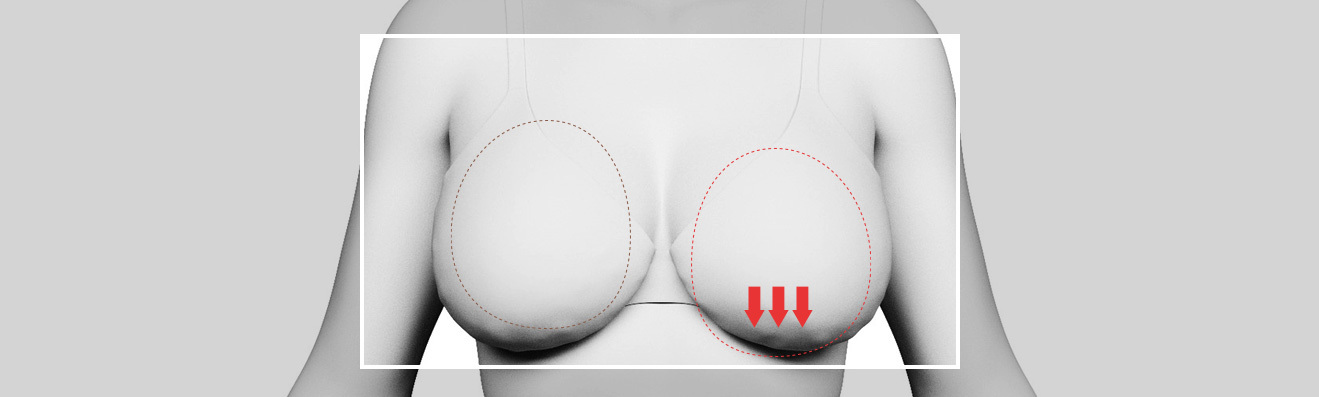
About bottoming-out surgery
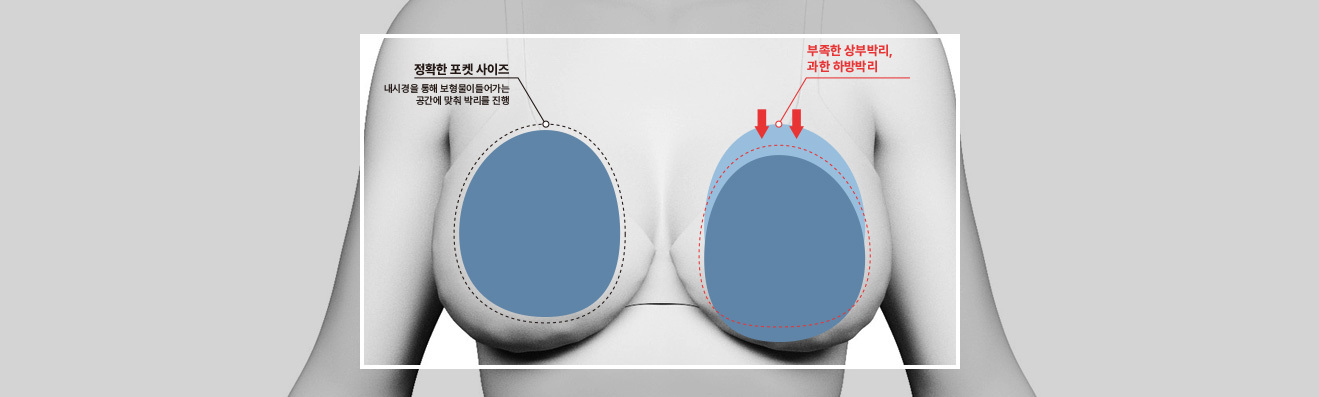
CHECKING POINT
· Implants that are too large and heavy for your body
· Continuous pressure from above
· Implant displacement caused by excessive pressure from the pectoralis major muscle
· Thin skin and soft tissue or reduced elasticity that allows tissue to stretch easily
Signs of bottoming out

CHECKING POINT
· The inframammary fold feels lower
· The breasts look elongated or sagging
· The nipples appear to sit relatively high
· The lower part of the breast looks overly expanded
· The inframammary folds look asymmetrical
Bottoming-out surgical methods
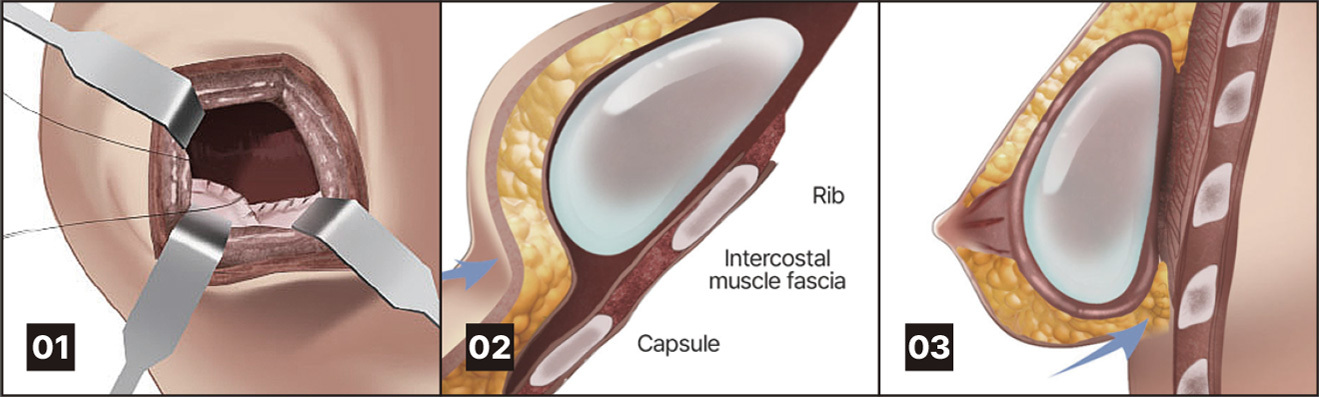
01. Capsulectomy
The capsule in the overly expanded lower pocket is excised.
02. Capsule connection
The stretched soft tissue is tied together, and the capsules are connected to reduce the space.
03. Fascial fixation
At the inframammary fold, periosteal and fascial tissue are additionally fixed to the tissue around the chest wall to prevent recurrence.