
Pre-Surgery Checklist
It is important to choose a breast size and shape that suits you before surgery.
Breasts should be evaluated from various perspectives, not just size, but also shape, symmetry, degree of sagging, separation, and movement. You should comprehensively assess your own breasts regarding whether there is sagging, the state of volume depletion, and overall shape.
- CHECK POINT 01
When breast ptosis is accompanied by sagging, a breast lift (mastopexy) may be performed at the same time to achieve a more balanced and lifted appearance.
- CHECK POINT 02
If there is volume depletion in the breast, you should select an appropriate size implant to fill it.
- CHECK POINT 03
When breast sagging is accompanied by volume loss, addressing both concerns simultaneously is essential for achieving a naturally beautiful breast contour.
Appropriate analysis of your rib cage shape and selection of surgical method are important.
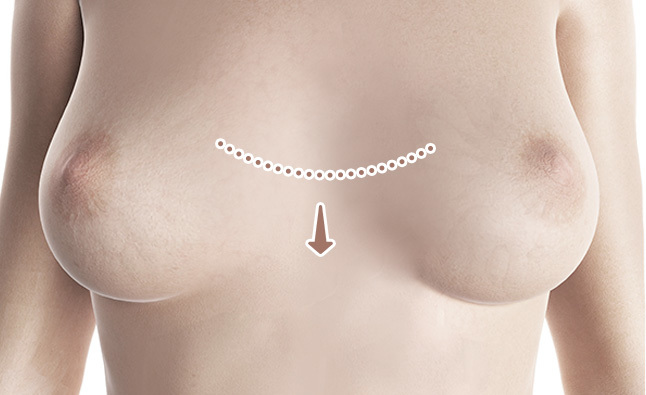
Pigeon chest with nipples pointing outward
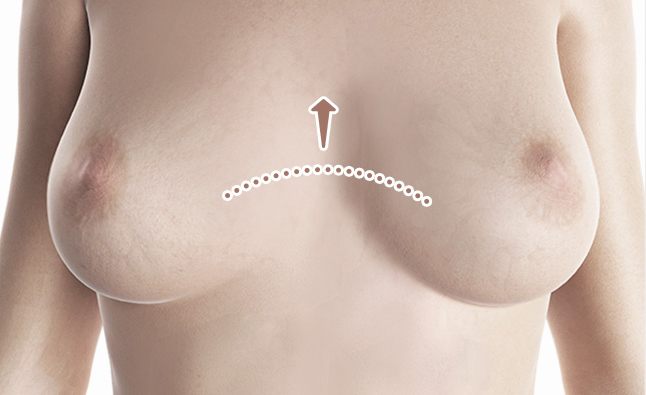
Funnel chest with nipples pointing inward
- CHECK POINT01
A normal rib cage shape has a smooth cylindrical form centered on the sternum in the central chest area, and the bony protrusions are not felt.
- CHECK POINT02
Pectus carinatum is characterized by a prominent sternum that protrudes forward relative to the ribs. This can make it challenging to create a well-defined cleavage.
- CHECK POINT03
Pectus excavatum is characterized by an inward depression of the sternum relative to the surrounding ribs. While this may make it easier to create cleavage, it can also result in an overly pronounced or unnatural-looking breast contour.
- CHECK POINT04
If there is rib cage asymmetry, an appropriate implant should be selected to compensate for this during breast augmentation surgery.
Surgical Method Based on Implant Placement
Under Breast Tissue / Fascia
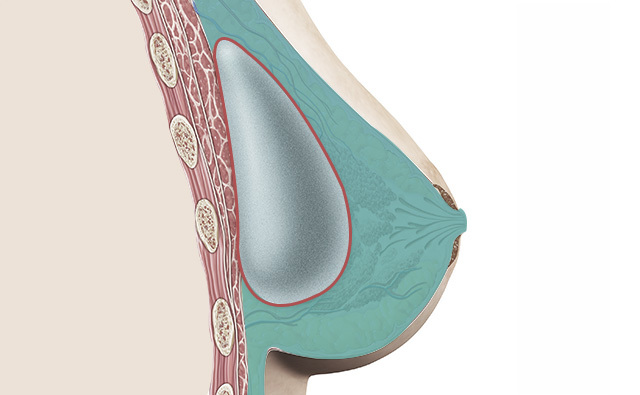
Under Breast Tissue / Fascia
This is a surgical method in which the implant is placed under the breast tissue and the pectoralis major fascia, resulting in a natural appearance postoperatively and is effective for sagging breasts. However, if breast tissue or fat tissue is thin, the implant may become overly visible, so consultation with a specialist is necessary.
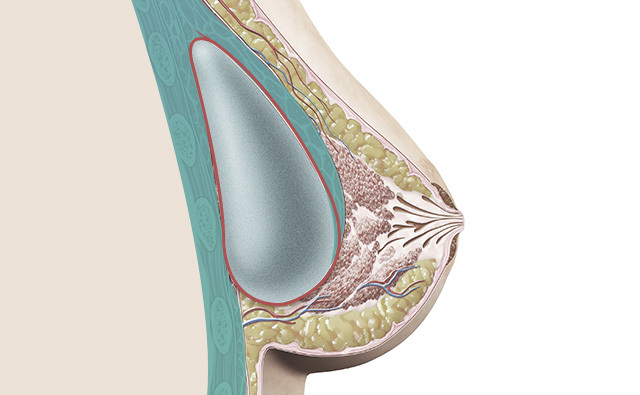
Complete Submuscular Placement
This is a method where the entire implant is placed under the pectoralis major muscle, offering excellent tactile sensation due to muscle thickness. However, it is heavily affected by muscle and may cause asymmetry depending on the degree of muscle development.
Breast health is more beautiful than appearance.
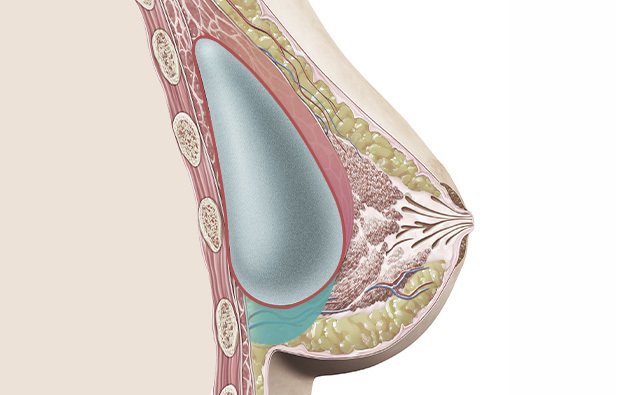
Dual Plane
A surgical technique that dissects space under the pectoralis major muscle for approximately the upper 2/3 of the implant and under the breast tissue for the lower 1/3, then inserts the implant. Since the implant is covered by the muscle, it offers the advantage of a natural feel and the ability to adjust the inframammary fold position.
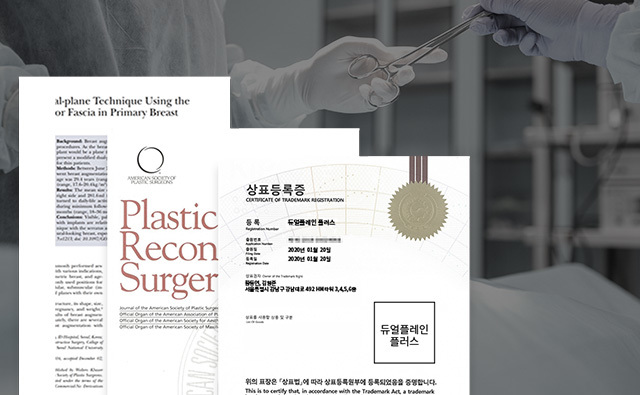
Dual Plane Plus (ONLY NANA)
An improved version of the conventional dual plane method published by Dr. Hwang Dong-yeon in the PRS Journal in 2016. In the conventional dual plane, the lower 1/3 is covered by breast tissue, but in Koreans, breast tissue is often minimal, so this method compensates by utilizing the serratus anterior muscle fascia.
Incision Methods Based on Implant Position
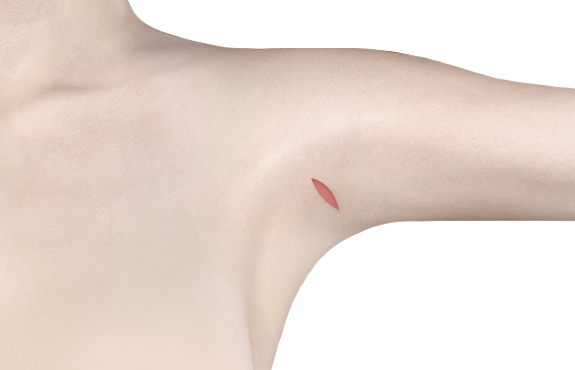
Axilla
The incision follows the axillary fold and scars are not easily visible. Additionally, blood vessels and nerves around the nipple are not damaged.
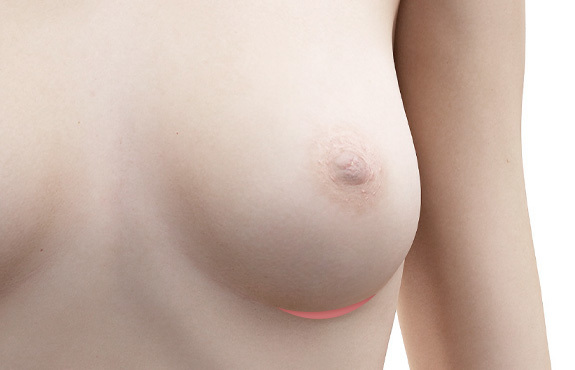
Inframammary Fold
This incision line provides good surgical visualization and is ideal for implant insertion. While scars may be more visible than in other areas, they can be nearly eliminated through scar care programs.
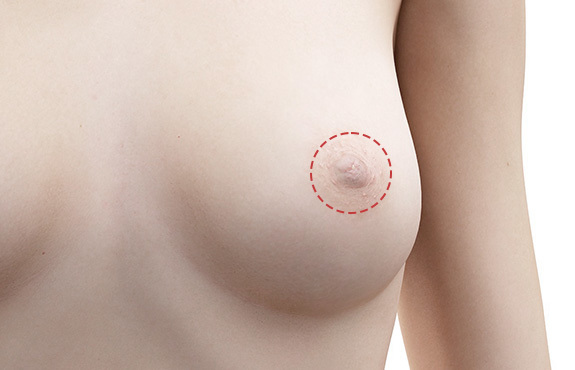
Periareolar
Unlike axillary incisions, arm and shoulder movement is unrestricted and scars are barely visible. Since the incision is made around the areola, those concerned about breastfeeding need not worry as the tissue is not damaged.
Frequently Asked FAQ
- A. You should assess not only the size of the breast but also the degree of sagging, volume loss, symmetry, separation, movement, and chest wall shape.
- A. If sagging is present, breast augmentation alone may not achieve the desired shape, so breast lift surgery can be considered together.
- A. Yes. Pectus carinatum (pigeon breast) or pectus excavatum (funnel chest) can affect the chest wall contour and implant selection, making pre-operative chest wall analysis important.
- A. Implant position—whether subglandular, submuscular, or dual plane—depends on skin and fat thickness, breast tissue, muscle development, and degree of sagging.
- A. Common types include axillary incision, inframammary fold incision, and periareolar incision, with selection based on scar location, recovery, surgical visualization, and implant insertion method.