NANA BLOG
Revision Rhinoplasty in Korea: When Is the Right Time?
Contents
Revision Rhinoplasty in Korea: When Is the Right Time?
Revision rhinoplasty in Korea is not a repeat of your first nose surgery. It starts with understanding why the first result did not hold, and with waiting until the tissue is ready.
Key takeaways
- Revision rhinoplasty corrects complications or unsatisfactory results from a previous nose surgery.
- An ideal nose is symmetrical, with a length comprising 1/3 of the face's vertical length.
- NANA recommends waiting a minimum of 6 months to 1 year, because successful revision surgery requires tissue stabilization.
- If the first surgery only raised the nasal bridge, revision can be considered after 3 months.
- Inflammation, implant deviation, or skin over the bridge that has turned significantly red calls for immediate revision.
- Precise surgical plans are developed using 3D-CT diagnosis rather than external appearance alone.
Three Principles of NANA's Revision Rhinoplasty
Revision rhinoplasty is a second operation performed to correct complications or an unsatisfactory result from a previous rhinoplasty. Before anything is designed, three principles guide how the new nose is planned.
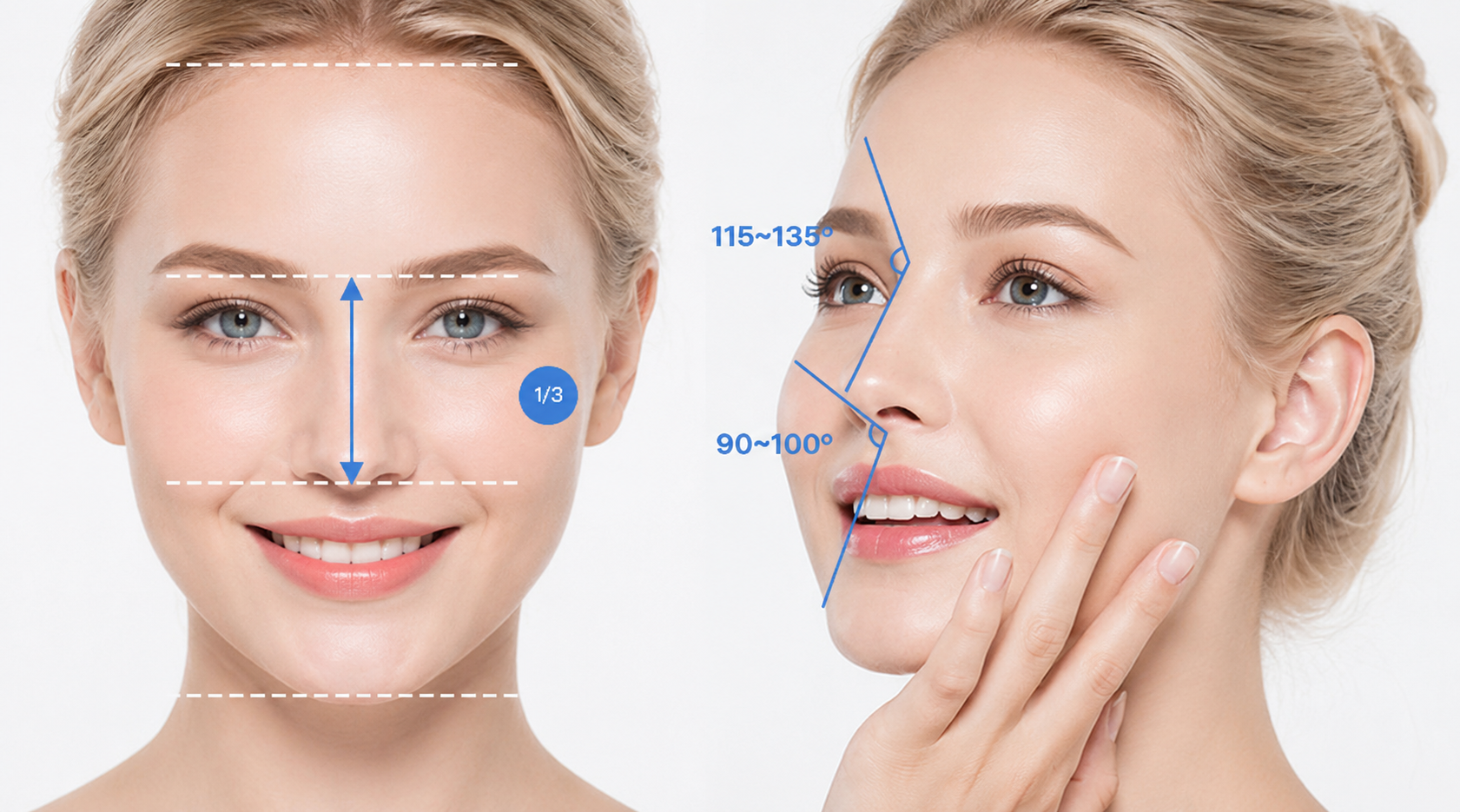
Ideal facial ratios
An ideal nose is symmetrical, with a length comprising 1/3 of the face's vertical length. The overall size, height, and other factors should harmonize with the face.
Accurate analysis and design
Designing a beautiful nose involves considering the shape and ratio of both the nasal bridge and tip, tailoring it to each individual.
1:1 individual customization
As the nose is the center of the face, we perform surgery based on individual customization principles to achieve harmony with other facial features like the forehead, cheekbones, eyes, chin, and lips.
For patients seeking revision surgery, the NANA medical team dedicates 1:1 consultations and design time, analyzes the causes of the previous failure, and performs the surgery to achieve the desired nose.
When should you have revision rhinoplasty?
Timing is the first question in almost every revision consultation at our Gangnam, Seoul clinic, and the answer depends on what the original surgery involved and whether anything is actively going wrong.
NANA recommends revision surgery after a minimum of 6 months to 1 year. Successful revision surgery requires tissue stabilization, and operating before the tissue has settled works against the result. Where the initial surgery focused solely on raising the nasal bridge, meaning augmentation rhinoplasty, revision can be considered after 3 months.
Because individual cases vary, a thorough consultation is necessary to determine the appropriate timing for your own nose. A general timeline is a starting point, not a substitute for examination.
Do not wait if you notice these signs. Immediate revision is necessary if there are issues like inflammation or deviation of implants, or if the skin around the nasal bridge turns significantly red, posing a risk of exposure. These cases should be seen without waiting for the standard healing window.
How revision rhinoplasty is planned at NANA in Seoul
Applying those three principles to a nose that has already been operated on takes more than a good design. Four things shape how revision rhinoplasty is planned at NANA in Seoul.
- Precise surgical plans are developed using 3D-CT diagnosis. Unlike traditional rhinoplasty, which only considers the external appearance, we use 3D-CT to assess nasal cartilage and tissues accurately for safe surgery.
- Implants are selected to the individual. We do not limit ourselves to using only easily designed implants. Implants are selected based on individual characteristics.
- Function is treated alongside shape. We do not just enhance the nose shape. Nasal congestion and rhinitis can be addressed at the same time.
- Skilled plastic surgeons guide consultations and surgeries, and personalized 1:1 solutions are provided based on individual type.
How the new nose is designed
Instead of a standard nose shape, the design considers the patient's facial structure and preferences to create a unique nasal contour. Individual facial balance guides the ideal nasal bridge and tip angle, and the nose is meticulously designed to look beautiful from both the side and the front view.
Rather than applying a uniform concept of beauty, the work respects individuality. Procedures are personalized and customized around the individual's nasal condition, shape, facial harmony, and preferences, with the aim of minimizing flaws and accentuating strengths to create the ideal nose.
Not sure if it is time for your revision?
Send your photos and details to our English-speaking team for a 1:1 review of your previous surgery and the right timing for revision.
Ask on WhatsAppWhy patients choose revision rhinoplasty
Patients travel to Korea for revision rhinoplasty for one of two reasons, and the urgency of each is very different.
The result was not what you wanted
- Dissatisfaction with the shape of the nose
- A nasal tip that has lifted over time
- A bridge or tip angle that does not suit your facial balance
- A nose that reads differently from the front than from the side
Something has gone wrong
- Inflammation
- Deviation of the implant
- Penetration of the existing prosthesis
- Skin over the nasal bridge turning significantly red, with a risk of exposure
The second column is not a wait-and-see list. Any of those signs calls for immediate revision rather than a wait for the 6 month to 1 year window.
What to expect at our Gangnam, Seoul clinic
1:1 consultation and cause analysis
Skilled plastic surgeons guide the consultation. The causes of the previous result are analyzed before anything is designed, and the appropriate timing for your case is determined here.
3D-CT diagnosis and design
A precise surgical plan is developed using 3D-CT diagnosis, assessing the nasal cartilage and tissues rather than the external appearance alone.
Personalized surgery
Personalized 1:1 solutions are provided based on individual type, with the design built around your facial structure and preferences rather than a standard nose shape.
Dedicated aftercare
NANA provides transparent information about your medical team. From planning to post-operative care, each patient is assigned a dedicated team member for personalized 1:1 care.
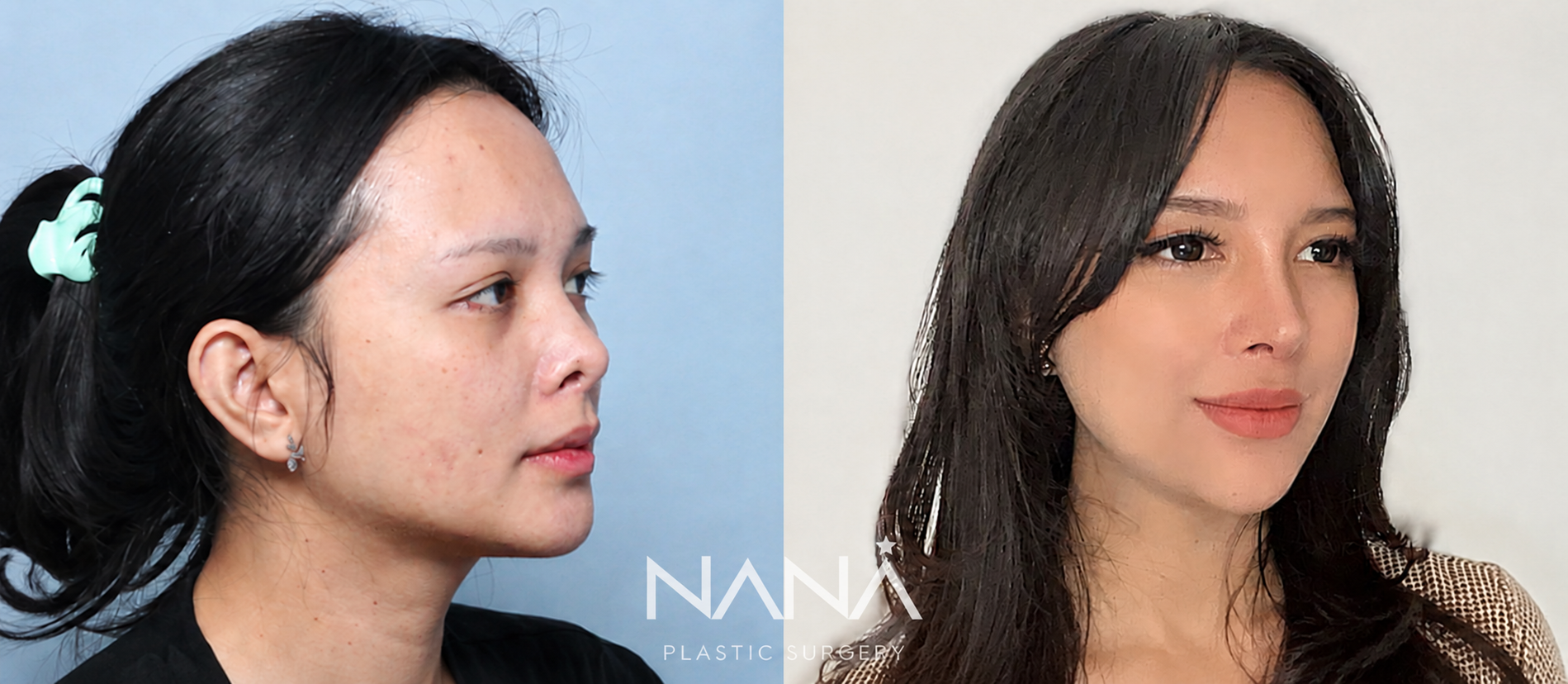
Revision Rhinoplasty Before and After

Questions
Revision rhinoplasty FAQ
What are the ideal nose proportions?
An ideal nose is symmetrical, with a length comprising 1/3 of the face's vertical length. The overall size, height, and other factors should harmonize with the face. Because the nose is the center of the face, surgery is performed on individual customization principles to achieve harmony with the forehead, cheekbones, eyes, chin, and lips.
How soon after my first rhinoplasty can I have revision surgery?
NANA recommends revision surgery after a minimum of 6 months to 1 year, because successful revision surgery requires tissue stabilization. If the initial surgery focused solely on raising the nasal bridge, meaning augmentation rhinoplasty, revision can be considered after 3 months. Since individual cases vary, a thorough consultation is necessary to determine the appropriate timing.
When is immediate revision necessary?
Immediate revision is necessary if there are issues like inflammation or deviation of implants, or if the skin around the nasal bridge turns significantly red, posing a risk of exposure. These cases should not wait for the standard healing window.
My nasal tip has lifted since my first rhinoplasty. Can revision fix it?
If the nasal tip lifts over time after rhinoplasty, simply returning to the same surgical method as before during a revision surgery will eventually cause the nasal tip to rise again. However, by using autologous cartilage to lower the nasal tip and securely fix it to the lower lateral cartilage, it is possible to prevent the lifting phenomenon over time and gently improve the nasal tip.
Does my existing implant have to be replaced?
If there was no particular problem with the prosthesis during the original nose surgery, it is not necessary to replace it during reoperation. However, in addition to dissatisfaction with the shape, most are newly replaced for reasons such as penetration of the existing prosthesis or inflammation.
Is 3D-CT used for revision rhinoplasty?
Yes. Precise surgical plans are developed using 3D-CT diagnosis. Unlike traditional rhinoplasty, which only considers the external appearance, 3D-CT allows the nasal cartilage and tissues to be assessed accurately for safe surgery.
Can revision rhinoplasty improve breathing as well as appearance?
The approach is not limited to enhancing the shape of the nose. Nasal congestion and rhinitis can be addressed at the same time as the aesthetic correction.
This article is for general information and education. It is not medical advice, and it does not guarantee any particular outcome. Results, recovery, and candidacy vary from person to person, and revision rhinoplasty is not suitable for everyone. Any surgical procedure carries potential risks. A personal consultation with a qualified medical professional is required before making any decision.
Have your previous surgery reviewed
Send clear front, side, and 45 degree photos to our English-speaking team for a personalized assessment of what can be corrected and when the timing is right for your revision.