Customized Rhinoplasty
Rhinoplasty at NANA Plastic Surgery is performed as
'customized rhinoplasty' best suited to each person's facial proportions.
Core technology of NANA rhinoplasty: ENT collaboration
At NANA Plastic Surgery, not only board-certified plastic surgeons but also ENT specialists are on site to check functional problems of the nose and improve nasal conditions. We are also the only clinic in Korea offering intranasal anti-adhesion treatment, which can treat a deviated septum or crooked nasal tip that may occur after septal cartilage harvesting, so you can receive rhinitis prevention and preemptive treatment.

Core technology of NANA rhinoplasty: 3D-CT
It may look simple from the outside, but the inside of the nose has a complex structure. NANA Plastic Surgery uses 3D-CT imaging to analyze in three dimensions the overall condition, size, shape, and asymmetry of the nasal bones, septal cartilage, and skin tissue. For revision surgery, we can also check the shape and problems of existing implants such as silicone, allowing an accurate and safe surgical plan.


Before & After Gallery
* More before-and-after photos are available after logging in.
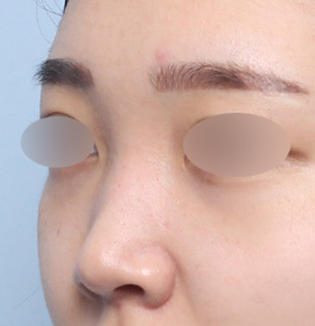
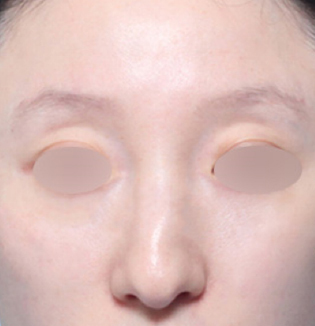
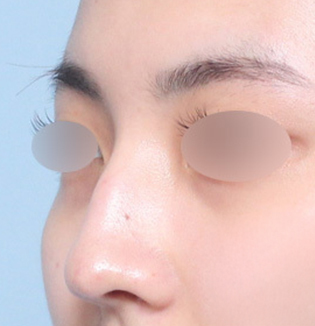
Rhinoplasty at NANA Plastic Surgery designs a natural, beautiful nose that best suits each person's face.
01
Low Nose
02
Deviated Nose
03
Hump Nose
04
Bulbous Nose
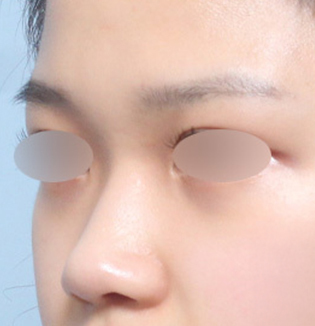
Features of rhinoplasty at NANA Plastic Surgery
We design a nose line that suits each person's face
so the line from the forehead to the tip of the chin is harmonious.
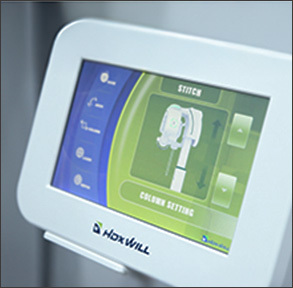
01
We precisely analyze even what cannot be seen in a general examination.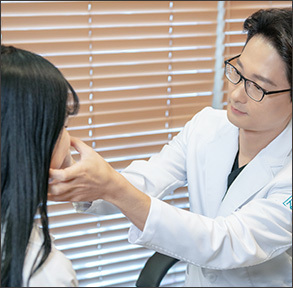
02
Based on the examination, we decide whether osteotomy is needed, as well as its amount and location.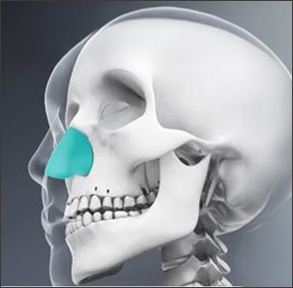
03
We check whether septal cartilage can be used as graft material and how much is available, and decide on the materials before surgery.
04
Not only aesthetic concerns but also functional issues such as nasal congestion and a deviated septum can be corrected at the same time.
05
Accurate examination and surgery lead to highly satisfying results.



NANA Plastic Surgery's
3 principles of rhinoplasty
Because surgery follows ideal facial proportions,
the nose is in harmony with the face.
- 01.
Ideal facial proportionsAn ideal nose is symmetrical, its length is 1/3 of the vertical length of the face, and its overall size and height are in harmony with the face.
- 02.
Accurate analysis and designBased on 3D-CT imaging, we design the nose that suits you best—not simply a higher bridge, but one that considers the shape and proportions of the bridge and tip.
- 03.
1:1 personalizedBecause the nose is the center of the face, surgery is performed on the principle of personalized design in harmony with the forehead, cheekbones, eyes, chin, and lips.
Rhinoplasty information

Surgery time
1 hour
Anesthesia
Sedation anesthesia
Stitch removal
5–7 days after surgery
Return to daily life
Daily activities possible after stitch removal
Follow-up visits
About 2 visits
What makes rhinoplasty special at NANA Plastic Surgery
With expertise gained from hundreds of surgical procedures,
we strive to deliver results that come as close to perfection as possible.
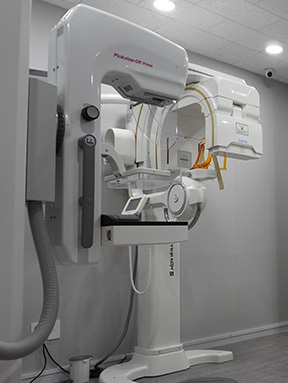
3D-CT imaging
Enables three-dimensional understanding of anatomical structures that cannot be seen in a general consultation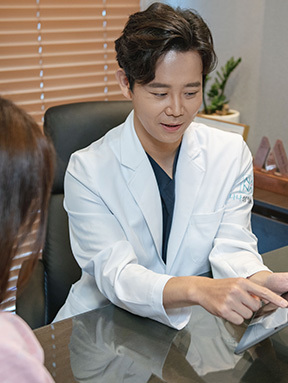
1:1 customized rhinoplasty based on shape and constitution
Custom surgery that considers each person's facial proportions and needs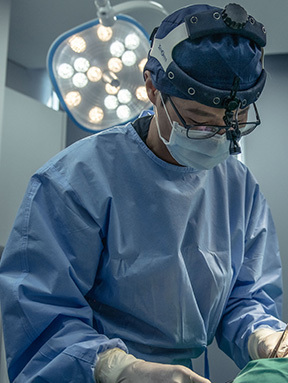
Considers function, going beyond aesthetics
Surgery combined with functional treatment through collaboration with ENT specialists
Q & A answered by NANA Plastic Surgery

How long does swelling last after rhinoplasty?
Swelling after rhinoplasty varies from person to person;
on average, the splint, stitches, and tape
are removed one week after surgery. Severe swelling and bruising subside within 1–2 weeks,
the nose looks relatively natural after about a month,
and residual swelling and scars gradually improve for up to 6 months.
However, this may also vary from person to person.
Is there a connection between rhinoplasty and rhinitis treatment?
Rhinitis can have various causes, so it is important to identify the cause beforehand
by seeing an ENT specialist before surgery.
Rhinitis may improve after rhinoplasty when
nasal congestion or rhinitis is caused by a deviated septum and the deviated septal cartilage
is harvested and used in the surgery.
However, if there are other causes, rhinitis can improve
only when those causes are addressed.
NANA Plastic Surgery's trusted rhinoplasty system

Personalized surgery
At NANA Plastic Surgery, personalized surgery is our principle. We design your nose considering its condition and shape, harmony with your face, and your personal preferences. We minimize weaknesses and enhance strengths to create the most ideal nose for you.
Surgeon identification and dedicated responsibility system
With our operating room surgeon-identification system, we honestly provide accurate information about your medical team, so you can trust us. In addition, from surgical planning and comprehensive check-ups to surgery and post-op care, a designated medical team provides 1:1 personalized care.
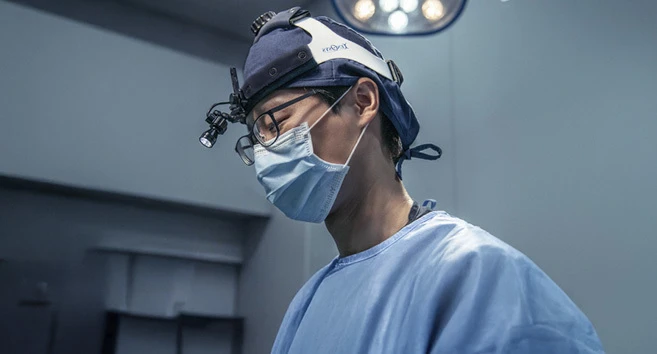

A naturally beautiful nose
At NANA Plastic Surgery, experienced specialists perform surgery so that the nose, the center of the face, is in harmony with the forehead, cheekbones, eyes, chin, and lips.
Safe and responsible post-op care
NANA Plastic Surgery puts safety first, with specialized safety systems inside and outside the operating room, such as our safe anesthesia system and uninterruptible power system. We also operate a professional aftercare center for fast recovery and satisfying results.

Precautions after rhinoplasty
from NANA
01
Face washing, showering & makeup
You may wash your face and wear makeup starting the day after the stitches on the columella are removed.Until the splint and tape are removed, clean areas other than the surgical site with a damp towel. You may wash your face and wear makeup starting the day after the stitches on the columella are removed. When washing your face, do not rub the nose area hard or apply pressure. It is best to wear glasses only after one month, and please avoid saunas and jjimjilbang (Korean spas) for one month.
02
Recovery progress
Slight bleeding and a runny nose may occur for 2–3 days after surgery.Please do not blow your nose hard for one month after surgery; gentle nose-blowing is possible after one month.
If ear cartilage was used, pain or changes in sensation may last up to 6 months.If ear cartilage was used, you may feel pain or changes in sensation when touching the area for up to 6 months. In most cases, pain and abnormal sensation improve over time, so there is no need to worry.
03
Swelling care
Facial swelling remains for about one month after surgery.It is common for the two sides of the nose to swell or subside differently, making the nose look asymmetrical. This asymmetric swelling improves over time until the swelling has fully subsided.
Apply warm/cold compresses at the appropriate times after surgery.Cold compresses are recommended for up to 3 days after surgery. They help prevent bleeding and reduce swelling. From day 4 after surgery, warm compresses are recommended for effective swelling and bruise management.
04
Wound care
Please visit the clinic for dressing changes and splint and stitch removal.If there is cotton packing in the nose or, when ear cartilage was used, gauze dressing behind the ear, visit the treatment room on day 2–3 after surgery to have the cotton and gauze removed and the area disinfected. The nasal splint and stitches are removed at the treatment room 6–7 days after surgery.
Care for the area with the prescribed ointment.After surgery, twice a day (morning and evening), clean the inside of the nose and the incision line with a cotton swab dipped in saline, then apply a thin layer of the prescribed ointment.
05
Drinking & smoking
Avoid drinking and smoking for one month after surgery.Drinking and smoking negatively affect bleeding, wound healing, and infection, so we recommend avoiding them for one month after surgery.
06
Sleeping position
Please check the sleeping positions allowed for 3 months after surgery.For up to one week after surgery, keep your neck from bending while sleeping, and keep your upper body elevated so that your head is higher than your heart—this helps swelling subside faster. Also, do not sleep on your side or stomach; sleep facing the ceiling.