


- Inquiry
- Before & After
- About NANA
- Breast
- Facial Contouring
- Nose
- Eyes
- Anti-Aging
- Body
- Men
- Feminization Surgery
- Dermatology
- WEEKDAYAM 10:00 - PM 07:00
- SATURDAYAM 10:00 - PM 07:00
- ※ Closed on Sunday National Holidays
Revision & Reconstruction
Nana breast
We're a breast enhancement clinic with extensive expertise
Revision &
Reconstruction
Beyond typical cases, our breast shaping experts, with diverse experiences in
revision surgeries, personally guide the procedures.
Proficiency in handling thickened membranes and refined techniques in dissection are
crucial for achieving positive outcomes in revision surgeries.

CHECK POINT 1
Customized Individual
Plastic Surgery Planning
Consultation Team

CHECK POINT 2
Breast Augmentation
Surgery Expertise

CHECK POINT 3
A Breast Surgery Center
that Understands
with a Woman's Heart
CHECK POINT 4
Anesthesia and
Pain Medicine Ensuring
Safety
CHECK POINT 5
The Aftercare Team
with Professional
Caregiver Certifications

CHECK POINT 1
Customized Individual
Plastic Surgery Planning
Consultation Team

CHECK POINT 2
Breast Augmentation
Surgery Expertise

CHECK POINT 3
A Breast Surgery Center
that Understands
with a Woman's Heart
CHECK POINT 4
Anesthesia and
Pain Medicine Ensuring
Safety
CHECK POINT 5
The Aftercare Team
with Professional
Caregiver Certifications
Revision Surgery case.1
Breast Size
In cases where the volume is insufficient or excessive compared to the individual's chest size or tissue
condition,
satisfaction with breast appearance can be enhanced by replacing implants to better suit the
individual's physique.
When breast size, initially satisfying after the first surgery, becomes less satisfactory over time due
to aging or tissue contraction,
revision surgery, by replacing implants, can achieve the desired breast size.
Increasing Breast Size
- Additional dissection is performed to
accommodate the larger implants.
- If the tissue thickness is thin,
reinforcement is done using methods
like liposuction or artificial dermal grafting.
- Generally, the same incision line used
in the initial surgery is utilized.
Decreasing Breast Size
- Adjustments are made to reduce thesize of the existing membrane
according to the diminishing size of the implants.
- Excessively wide membranes may be partially excised and sutured.
- If there is sagging tissue, the excess tissue is excised.
Revision Surgery case.2
Breast Shape
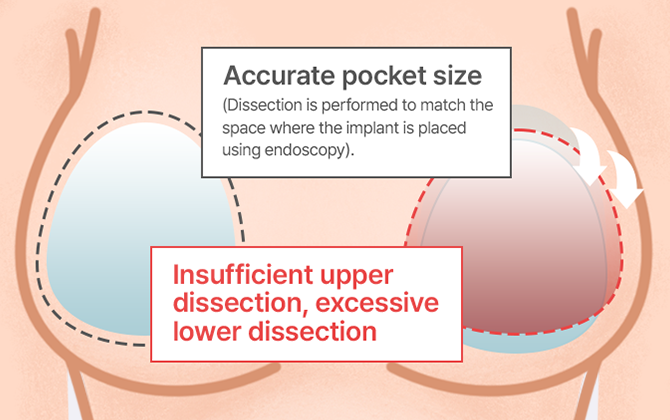
When the space where the implant was placed is not properly dissected or deformities occur over time,
reshaping the breast by redistributing the implant space or creating a new pocket can lead to an ideal
breast shape.
Despite using implants to obtain breast volume, the upper volume may still be insufficient,
or the chest may appear excessively wide. Revision surgery can correct these issues.
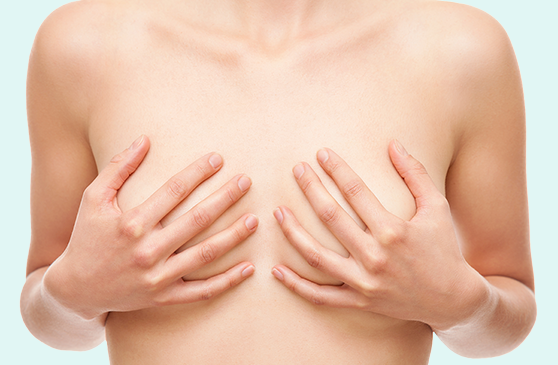
Widening of the Chest
01
If the implant space is narrow,
the chest's lateral space is dissected to
create a new pocket.
02
If the implant is small, it is replaced with a size that
can
sufficiently
gather the chest.
03
If the connective tissue thickness of the chest is thin,
fat grafting is performed
to increase the connective tissue thickness.
04
If the implant has shifted outward,
the capsule of the excessively formed outer
pocket is excised, and capsuloplasty is
performed to appropriately close the space.
Insufficient Upper Volume
01
If the implant volume is insufficient,
it is replaced with an implant size that fills
the upper breast volume adequately.
02
If the breast is sagging,
measurements of the breast lower pole are taken,
and the necessary lifting procedures are performed to rearrange glandular tissue.
03
If the implant has moved downward,
the downward position of the implant
is reversed,
closing the excessively formed lower pocket.

Revision Surgery case.3
Breast Sensation
If existing implants feel overly firm due to outdated versions, replacing them can achieve a more
natural sensation.
To address discomfort from inadequate tissue or size mismatch, implants can be replaced with added fat
or artificial dermal grafting for a natural feel.
Breast sensation depends on factors like implant characteristics, membrane thickness, and tissue
condition.
Surgery is conducted after pinpointing the reasons for unsatisfactory sensation.
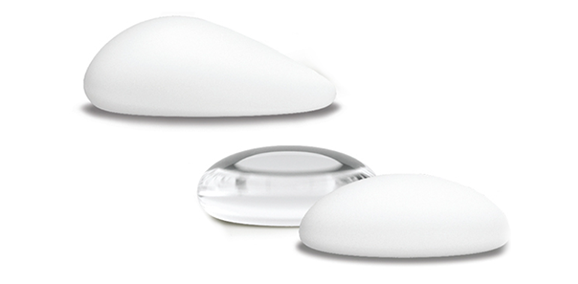
01. Causes
- Previous-generation implants have a different feel compared to current
- generation implants.
- Implants with a drop-like shape often use highly elastic silicone gel to maintain
their shape, resulting in a relatively firm breast feel.
- Simply replacing with current-generation implants can achieve a more natural
feel than older-generation implants.
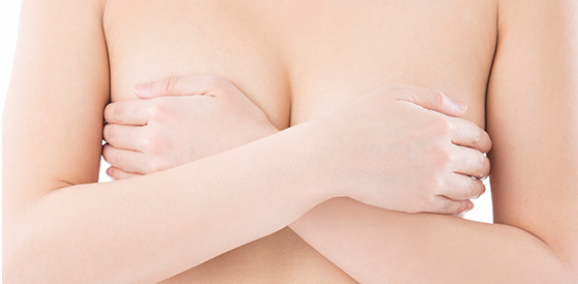
02. Surgical Approach
- In cases where the tissue, including fat tissue, is thin based on body
characteristics, the feel of the implants may be unsatisfactory. To address this,
procedures like fat grafting are performed to create a more natural breast feel.
- If excessive skin elasticity prevents the implants from moving easily, additional
measures may be taken to improve the feel.
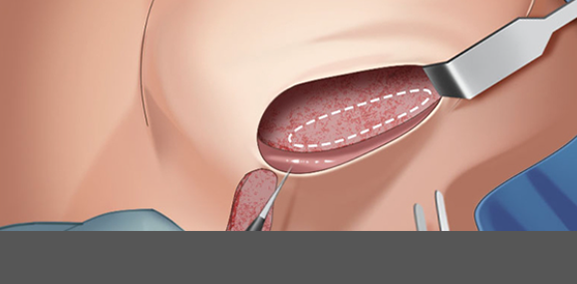
Membrane Resection Surgery
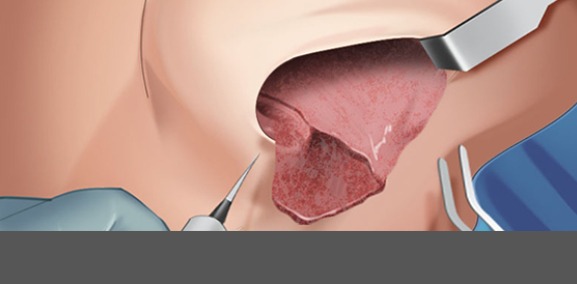
Complete Membrane Resection Surgery
03. Membrane
- A membrane forms around all implants inserted into the body, determining the breast
sensation based on its thickness and hardness.
- Thick or rigid membranes are removed to eliminate the
encapsulation around the implants.
- Careful hemostasis during surgery aims to create a new
membrane that is soft and thin.
Revision Surgery case.4
Breast Asymmetry
Various factors, including the displacement of unilateral implants or breast sagging, can lead to
asymmetry after breast surgery.
Understanding the causes of asymmetry allows for solutions tailored to each cause to improve the
condition.
Breast asymmetry can arise from diverse factors like chest shape, developmental differences, and sagging
variations. Variations in nipple position,
inframammary fold, and size can result. Addressing glandular tissue sagging and implant position
differences helps improve breast symmetry.
Implant Differences
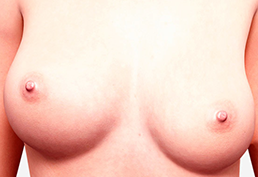
Case 1.
Bottom Sagging
When a unilateral implant shifts to the
lower part of the breast, the positions
of the implant, nipple, and inframammary
fold differ. Correcting bottom sagging
involves adjusting the implant position,
as well as the positions of the nipple and
inframammary fold.
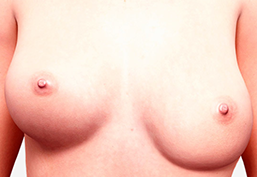
Case 2.
Spherical Contracture
Spherical contracture on one side can
cause the membrane to become firm,
leading to differences in the upper fullness
and inframammary fold on both sides.
Revision surgery for spherical contracture
can improve both the sensation and
asymmetry of the breasts.
Glandular Tissue Differences
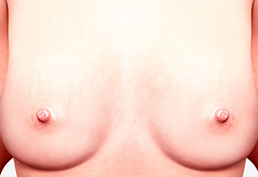
Case 3.
Sagging
Aging may cause breast sagging, and in
most cases, the degree of sagging
differs between both sides. In such cases,
the more sagging breast shows a lower
position of the nipple and inframammary
fold.
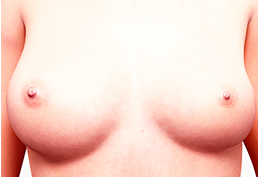
Case 4.
Size
Symmetrical breast development is
uncommon, with one breast typically
slightly larger. Correcting such
asymmetry involves diagnosing it during
breast augmentation surgery and
inserting implants of different sizes on
each side.
Revision Surgery case.5
Spherical Contracture
Various factors such as surgical techniques, inflammation, hematoma, and genetic factors can cause
spherical contracture after implant insertion.
Surgical approaches, including adequate removal of the existing hardened membrane and measures to reduce
recurrent contracture, are essential.
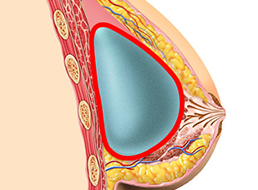
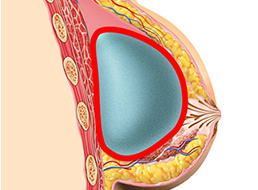
All implants, including those in the breasts, are surrounded by a capsule made of collagen.
In most cases, this capsule is thin and elastic, allowing for a soft feel of the implants.
However, in some cases, a thick and rigid capsule forms, leading to spherical contracture. Surgical
intervention for spherical contracture
considers the patient's condition, the previous surgical incision site, and other factors.
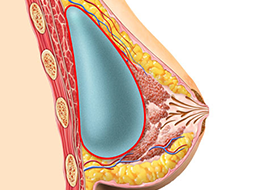
Spherical Contracture
Stage 1
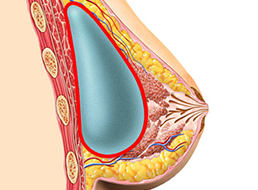
Spherical Contracture
Stage 2
Spherical Contracture
Stage 3
Spherical Contracture
Stage 4
01. Causes
- Bacterial infection and inflammation.
- Contamination of implants by nipple incision and breast milk.
- Persistent hematoma and seroma.
- Implant damage and silicone leakage.
- Genetic factors, such as excessive collagen formation.
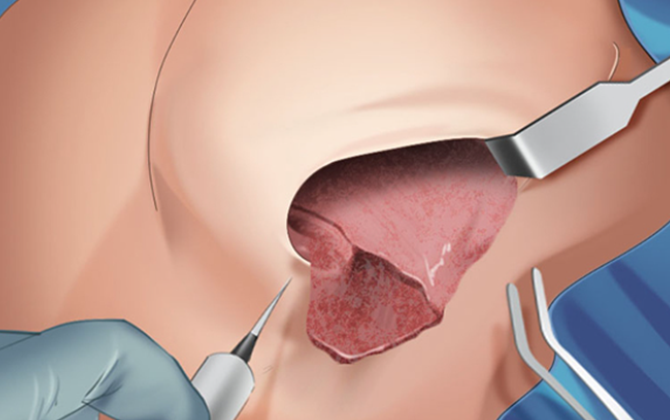
02. Surgical Approach
- Remove the implants that caused spherical contracture.
- Excise thick and rigid membranes.
- Ensure thorough hemostasis and expose healthy tissue.
- Insert new implants.
- If necessary, insert artificial dermal grafts into the space where the implants are placed to assist in membrane formation.
-Maintain the use of preventative medication for spherical
contracture for more than three months.
Revision Surgery case.6
Implant Damage
Implants are generally resistant to everyday pressure, but excessive or continuous force can lead to wear and tear, resulting in implant damage.
The condition is diagnosed through ultrasound examination, and the damaged implant is replaced after removal.
Preoperative ultrasound scans are conducted to tailor a personalized reoperation plan.

01. Causes
02. Surgical Procedure
Revision Surgery case.7
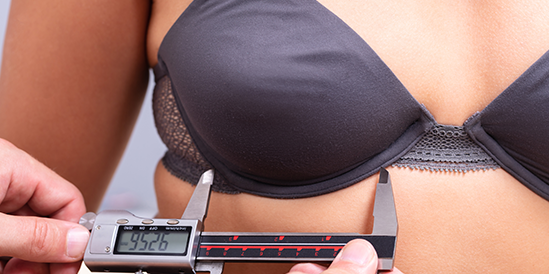
Implant Removal
If the appearance after inserting breast implants differs from the original expectations or feels
awkward due to aging
or musculoskeletal disorders, implant removal surgery can be performed.
Breast implants often contribute significantly to aesthetic satisfaction. However, in cases where aging
or musculoskeletal disorders lead to a reduced
necessity and a perception of awkwardness, removal is a viable option. This is a relatively quick
procedure, taking approximately 15 minutes.

01. Causes
02. Surgical Procedure
When is the Right Time
for
Breast Reoperation?
Cosmetic Improvement
Reoperation
Dissatisfaction with breast shape, size,
or feel,
and asymmetry in both breasts.
Timing
6 months to 1 year after
the initial surgery
※ This period allows the inserted implants
to settle,
and the incisions to heal.
Reoperation due to
Side Effects
Reoperation recommended promptly
for issues like
breast capsular
contracture or implant damage.
Excellence of NANa
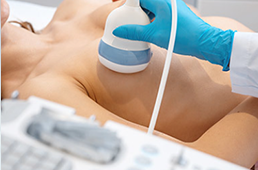
Breast specialists conduct precise ultrasound
examinations to assess breast conditions.
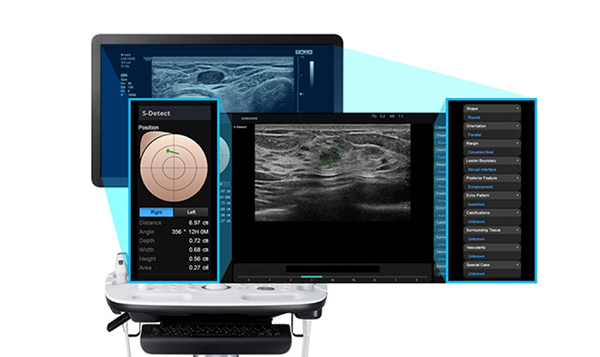
Thorough analysis that may seem excessive
Collaboration between Plastic Surgery
and Breast Disease Surgery specialists
- Precision breast surgery planning
- Pre/postoperative breast ultrasound examinations
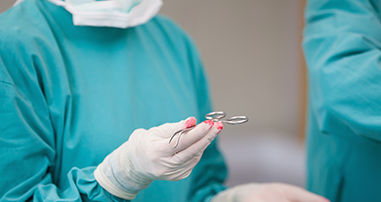
01
Collaboration between Plastic Surgery
& Breast Disease Surgery Specialists
High-resolution ultrasound confirmation not
only of implant rupture
and folding status but
also an assessment of potential side effects.
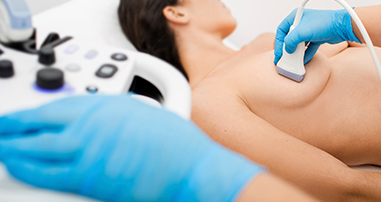
02
Discernment of Implants
via Ultrasound
Evaluation of the condition of existing implants,
including the manufacturer, type, and thickness
of the surrounding tissue, using ultrasound.
03
Breast Disease Examination
and Treatment
In-house Breast Disease Surgery specialists
provide comprehensive examinations and
treatments for breast conditions, from necessary
pre/postoperative assessments to detailed
examinations and treatments for breast diseases.
01
Collaboration between Plastic Surgery
& Breast Disease Surgery Specialists
High-resolution ultrasound confirmation not
only of implant rupture
and folding status but
also an assessment of potential side effects.
02
Discernment of Implants
via Ultrasound
Evaluation of the condition of existing implants,
including the manufacturer,
type, and thickness
of the surrounding tissue, using ultrasound.
03
Breast Disease Examination
and Treatment
In-house Breast Disease Surgery specialists
provide comprehensive examinations and
treatments for breast conditions, from necessary
pre/postoperative assessments to detailed
examinations and treatments for breast diseases.
Nana Breast Clinic's
intricate reoperation
planning in four steps
In-depth analysis for meticulous surgical planning.
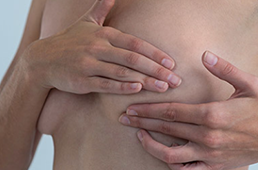
STEP 01
Analysis of breast shape and texture
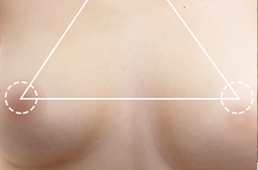
STEP 02
Analysis of asymmetrical elements
such as the breast crease, nipple, and
chest shape
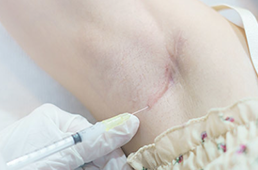
STEP 03
Analysis of the condition of previous
surgical incisions and scars
STEP 04
Final surgical planning based on the
results of breast surgery examinations
NANA Medical
Equipment
NANA Breast Clinic is equipped with state-of-the-art
premium devices for perfection.
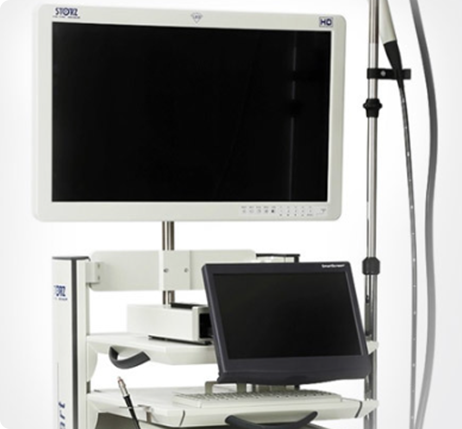
German Storz
Full HD endoscope
Detailed examination of small blood vessels
and tissues
for precise dissection using
- Advanced image enhancement technology achieves
Full HD quality for more accurate diagnosis and surgery
- Minimizes incisions and dissections with
precision and
stability
- Reduces unnecessary nerve damage, tissue
damage,
and bleeding
- Prevents side effects and promotes rapid recovery
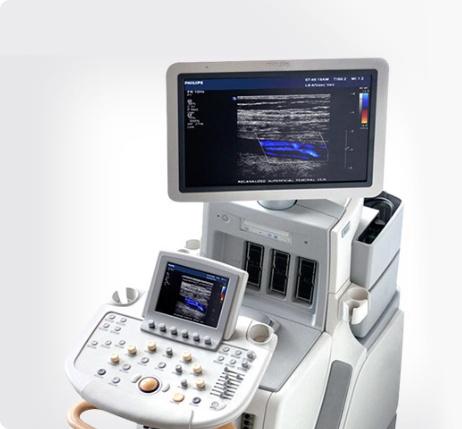
Philips High-
Resolution Ultrasound
Capable of measuring fine cracks in implants
or
the subtle thickness of the capsule
- Implements clear imaging for
accurate and swift
diagnosis
- Optimized for demanding breast examinations,
serving
as the best equipment available
- Enables precise identification and assessment
of the
location and condition of breast implants
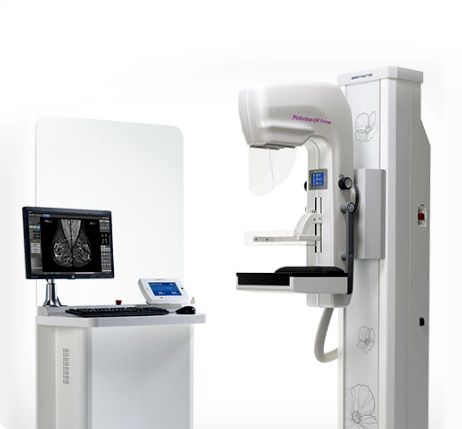
GE Hospital-grade
Mammogram
For checking breast health alongside
aesthetic
improvements
- Detects microcalcifications even
in early breast cancer
without symptoms
- Identifies breast damage caused by
illegal silicone
injections
- Differentiates between implant rupture
and lesions from
typical wounds
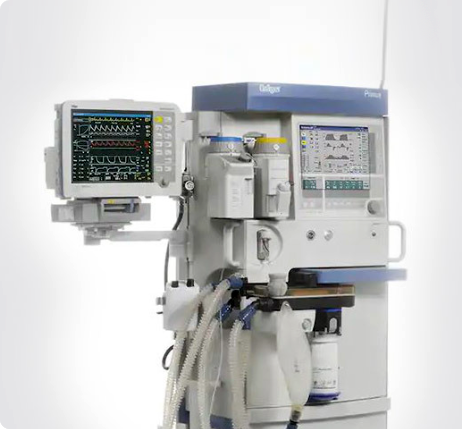
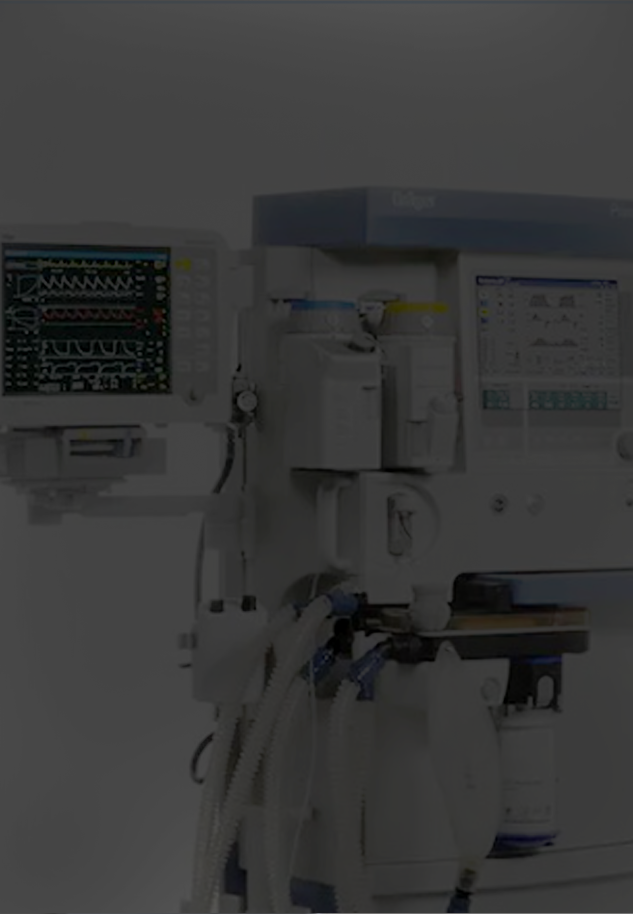
German Drager High-End
Anesthesia Machine
For safe anesthesia and minimal pain
- Adjustable depth and duration of
anesthesia for safety
- Self-powered during power outages,
ensuring prolonged
anesthesia
- Absorbs and supplies ambient oxygen
in case of oxygen
depletion
Recommended Treatment
for a Smoother Recovery and Enhanced Results
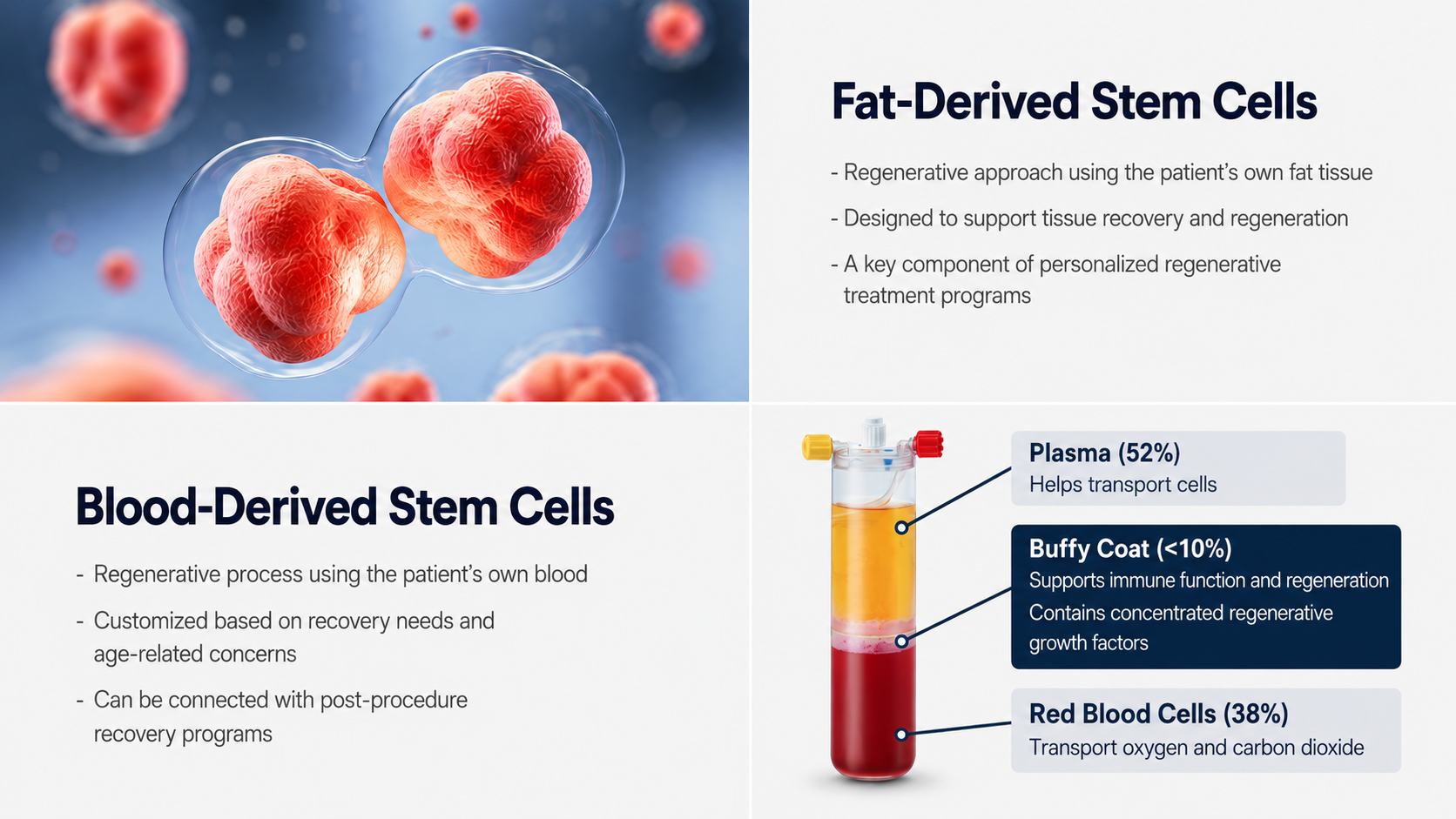
Core Features of NANA Plastic Surgery's Stem Cell Center
*Stem cell treatment is not suitable for everyone. Depending on each patient’s individual
condition and test results, the treatment may not be recommended or may not be possible.
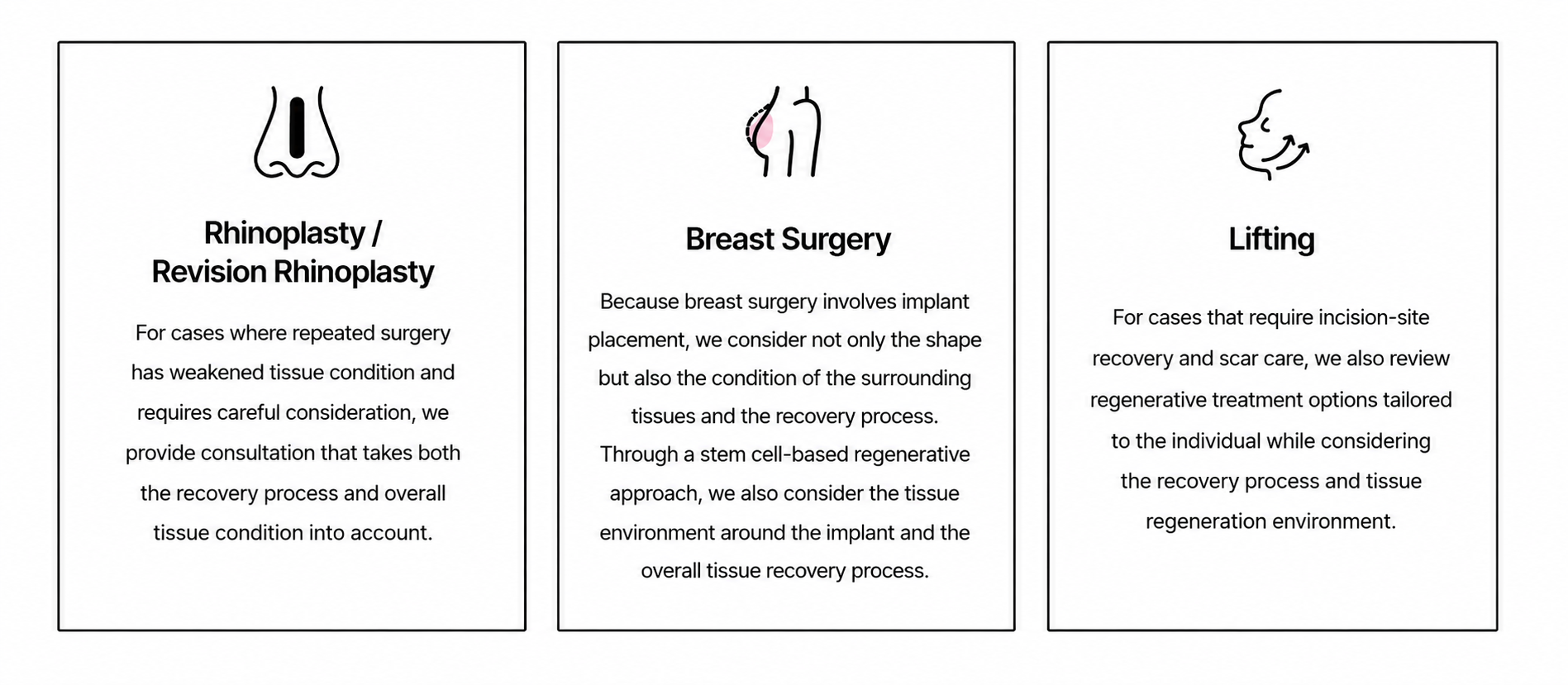
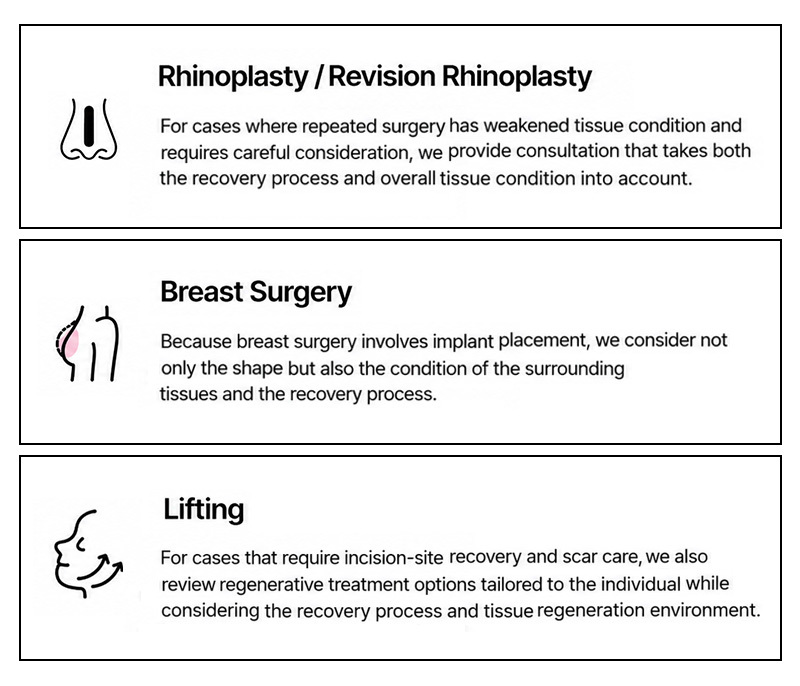
NANA Stem Cell Application Areas
CLICK FOR MORE INFORMATION





Privacy Policy


