
NANA BLOG
Natural Lift, Refreshed Eyes: Ponytail Lifting in Korea at NANA Plastic Surgery
Contents
Natural Lift, Refreshed Eyes:
Ponytail Lifting in Korea at NANA Plastic Surgery
Bright eyes, a softer facial line, no full facelift. Ponytail lifting gently raises the outer eye corners and mid-face through a hidden incision inside the hairline, for the tied-back look you get when your hair is up. Here is how it works at NANA, and how to tell if it fits you.
Not every tired-looking face needs a full facelift. Sometimes the change starts higher up, at the outer corners of the eyes and across the mid-face, where a little descent can make the whole face read as heavy or worn out. Among the many Korea plastic surgery options for a refreshed look, ponytail lifting targets exactly that zone. It raises the eye corners and mid-face along a soft, upward diagonal, so the result feels like the light, gently lifted look you get when your hair is tied back, rather than a broad, strongly pulled one. At NANA Plastic Surgery in Seoul, our lifting specialists design it around your facial balance, not a fixed method applied to everyone. This guide covers what ponytail lifting is, how it compares with a facelift, and who it suits.
Key Takeaways
- Ponytail lifting is a natural lift of the outer eye corners and mid-face, not a full facelift. It raises the upper and middle face along a soft diagonal for a tied-back, refreshed look.
- It works through a hidden incision inside the hairline, angled to follow hair growth, so the scar stays discreet and the hairline looks natural.
- It lifts at the SMAS layer, not the skin alone, with a limited dissection centered on the temporal area, so the change looks natural and recovery is relatively quick.
- It best suits early to moderate change, often the 20s to early 40s, while a facelift addresses more advanced lower-face and neck sagging.
- Plan around 5 days to 1 week of initial recovery, with a follow-up visit 2 to 3 days after. A consultation is the only reliable way to match the technique to your face.
What Is Ponytail Lifting?

Ponytail lifting raises the line from the outer corner of the eye through the mid-face to complete a soft, refined impression. It is performed through a small incision inside the hairline, so the closure stays relatively discreet. Rather than tightening skin alone, it lifts the SMAS layer as well, helping to firm tissue that has begun to look loose.
The goal is not simply to pull the skin. NANA considers facial proportion and the movement of the soft tissue together, so expressions stay natural and the overall balance looks harmonious. Many patients describe the result as eyes that open lightly, as if the hair were tied up, with a look that is both defined and soft.
A Hidden Incision Inside the Hairline
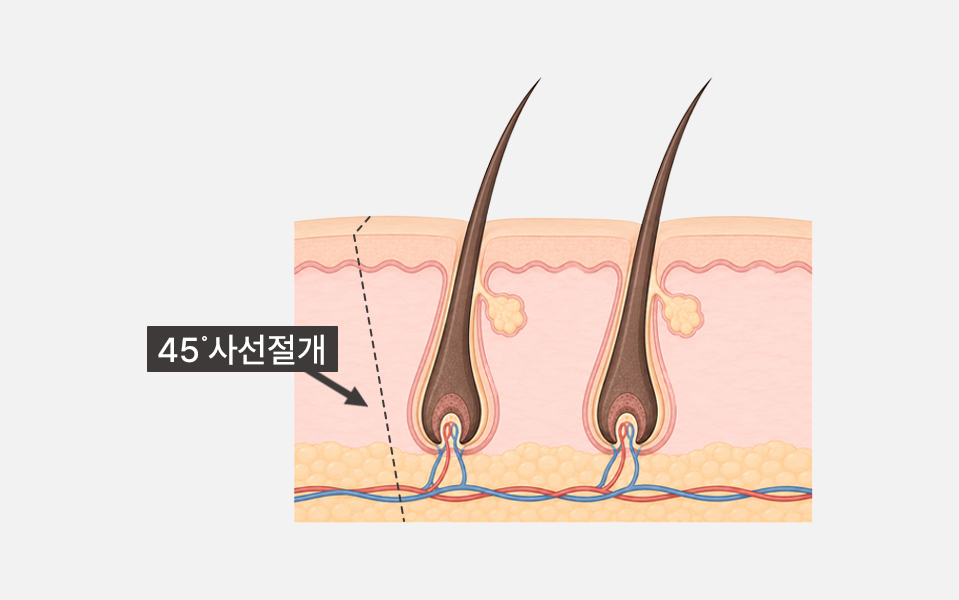
The incision follows a diagonal angle that respects the direction in which the hair grows, so the line stays relatively hard to notice. Because it is placed carefully inside the hairline, it helps reduce the burden on both scarring and hair roots, and it supports a natural-looking hairline after surgery. A more limited incision also helps ease recovery and the return to daily life.
Why the temporal area matters
Instead of pulling the whole face firmly, ponytail lifting focuses on the temporal region with a limited, precise release. Through the hidden incision, the eye line and mid-face are raised along a gentle diagonal, so the balance between the eyes and the facial line is considered together. This is what gives the result its light, tied-back quality rather than a tight, over-pulled one.
Ponytail Lifting vs. Facelift in Korea
These are not the same procedure. The incision range, the direction of the lift, and the effect are all different.
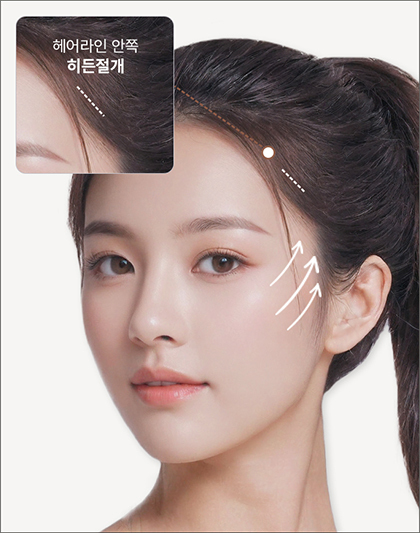
A tied-back, softly lifted impression. Raises the eye corners and mid-face along an upward diagonal for a defined yet gentle look.
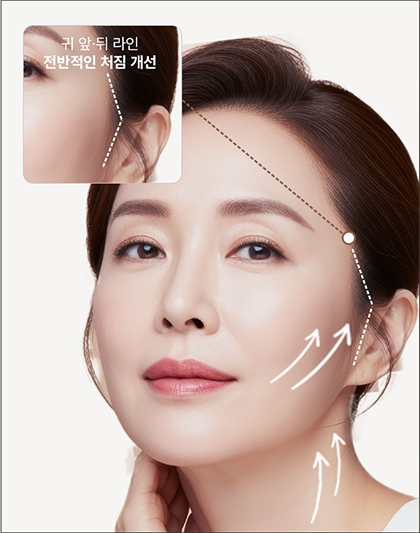
A firmer, more structured jawline and line. Addresses deep cheek, jowls, folds, and neck sagging through incisions around the ear.
| Ponytail Lifting | Facelift | |
|---|---|---|
| Lift direction | Eye corners and mid-face, diagonal and upward | Jawline, lower face, and neck, horizontal and upward |
| Areas addressed | Eye corner and mid-face sagging, a tired impression | Deep cheek, jowls, nasolabial and marionette folds, neck line |
| Method | Minimal incision plus endoscope, upward fixation | Incision with SMAS lift and skin redraping |
| Recovery guide | About 5 days to 1 week | About 2 weeks to 1 month or more |
| Typical age | 20s to early 40s, early aging | Mid 40s to 60s and beyond, advanced sagging |
Recovery timelines are general guides only. The right approach can vary with your skin elasticity and degree of sagging, so a consultation and assessment are important before deciding.
Not sure whether ponytail lifting or a facelift fits your face? Send us a clear front and side photo and our team will review it with the doctors, with no obligation.
Which Lifting Suits You?
NANA's tailored lifting program does not recommend a procedure by age alone. It considers age, sex, skin elasticity, and your concern areas together, then proposes a direction that fits your impression and overall look. As a general guide:

Natural elasticity care
Light sagging and facial line refinement, focused on a naturally improved impression. Options often include ponytail lifting, mini lifting, thread lifting, and laser lifting.

Early change begins
Changes across the eyes, mid-face, and jawline considered together. Options may include ponytail lifting, mini lifting, thread lifting, laser lifting, and facelift.

Clearer line change
The focus shifts to improving both sagging tissue and skin elasticity, often with a mini lift or facelift.

Overall aging
The facial line and neck line are considered together, typically with a facelift or neck lift.
Explore the related options on the Facelift, Mini Facelift, and Thread Lift pages.
A Limited, Precise Approach
Rather than a broad, wide release, NANA uses a more limited approach to raise the eye and mid-face line naturally.
SMAS-level lifting
Instead of firmly pulling skin alone, the SMAS layer is considered as well, so the change stays natural and free of an over-pulled feeling.
Limited dissection
The face is not released broadly. A limited dissection centered on the temporal area helps reduce tissue burden and eases recovery, approaching only the areas that need it.
Endoscope precision
An endoscope keeps the incision relatively limited while providing a clear field of view, supporting a precise procedure and a natural, quicker recovery.
How Ponytail Lifting Works
Ponytail lifting does not pull and fix the whole face firmly. It raises the flow of the eye corners and mid-face naturally to complete a soft, refined impression, generally following these steps.
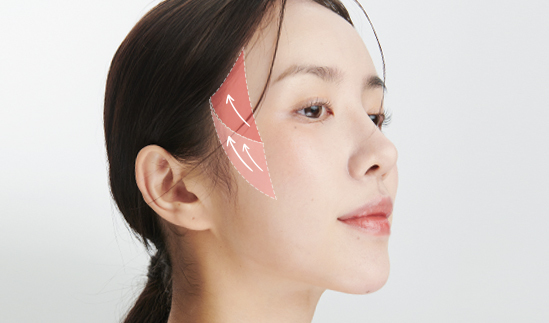
Eye corner and mid-face focus
Unlike a standard facelift centered on the lower face, the change is centered on the outer eye corners and mid-face for a natural shift in impression.
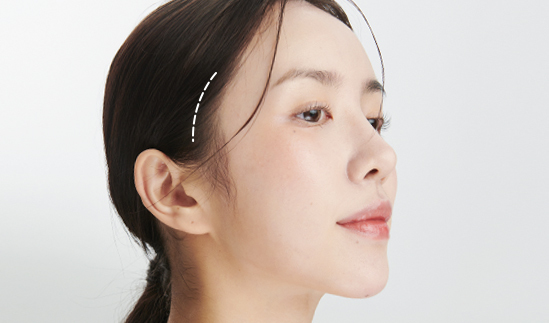
Hidden incision inside the hairline
The incision runs carefully inside the hairline so it stays relatively discreet, with a limited incision range that supports faster recovery.
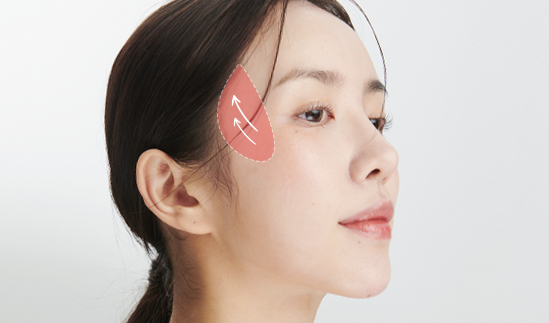
Temporal-focused natural lift
Through a limited release in the temporal area, the eye and mid-face line are raised along a diagonal, favoring a soft, defined flow over a tightly pulled look.
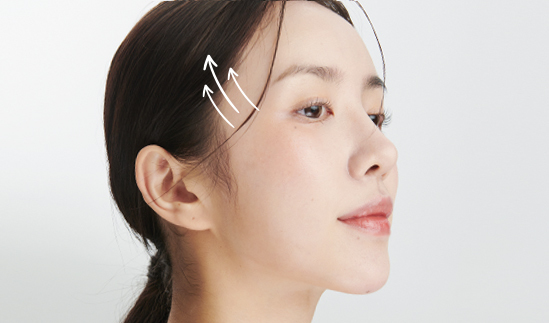
A tied-back, natural finish
Rather than fixing the whole face firmly, the harmony of the eyes and facial line is considered together to complete a look that is both defined and soft.
Before & After: 7 Days Post-Op in Korea
A look at how the eye corners and mid-face begin to settle in the first week after ponytail lifting. Swelling is still easing at this stage, so the final, more natural line continues to refine over the following weeks
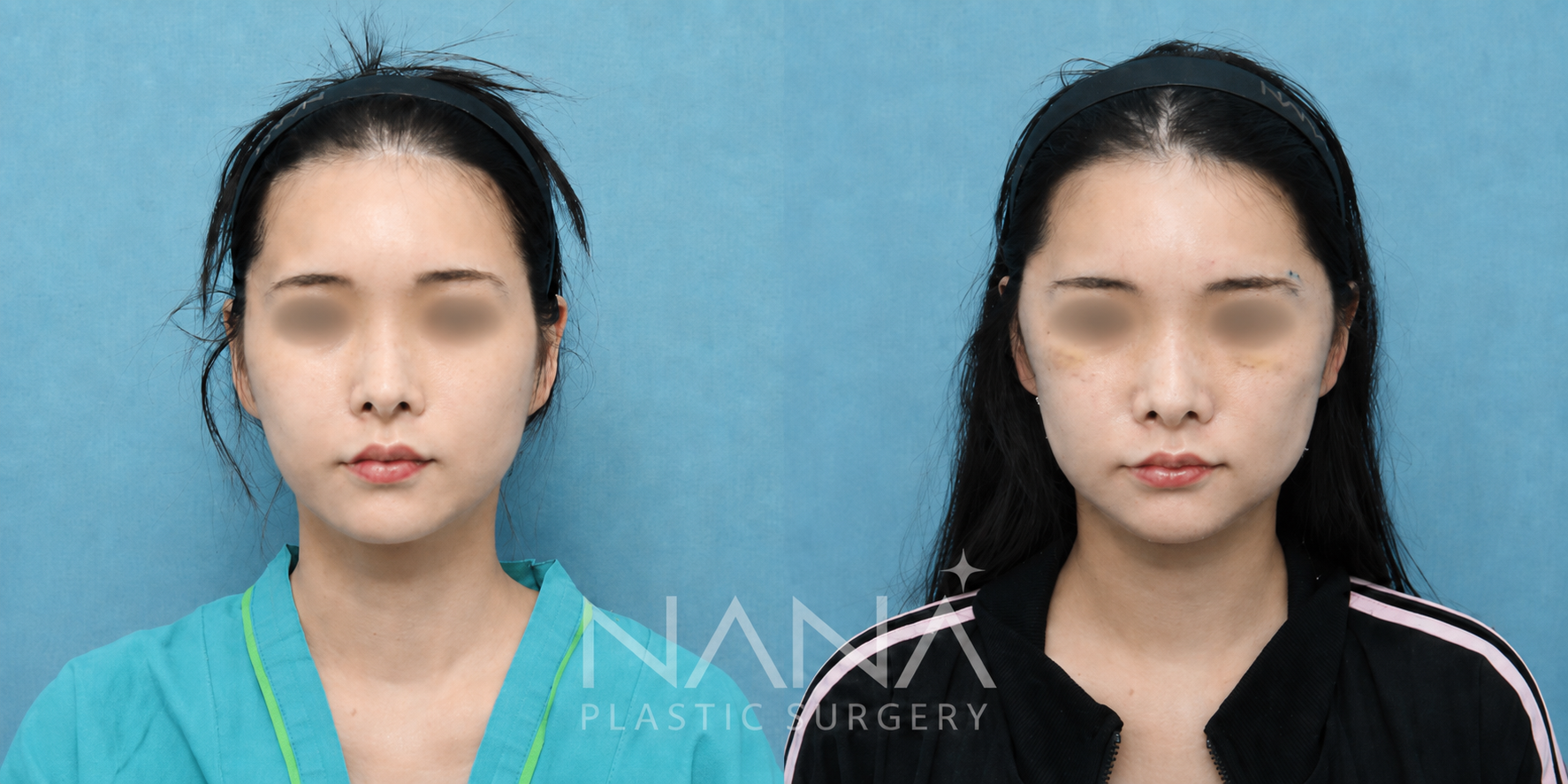
Individual results vary. Photos are for reference only and do not guarantee a specific outcome.
Surgery Information
These are general guides. Swelling and recovery speed can vary with your skin condition and the extent of surgery.
NANA's Recovery System
Ponytail lifting is not only about raising tissue. The recovery flow and the condition of the tissue afterward matter just as much. NANA runs a premium recovery care system, considering each person's skin condition and recovery pace.
- Healite care around the first week, to help ease swelling and support recovery
- Radiofrequency care around the fourth week, to support skin elasticity and tissue recovery
- Attending doctor progress system, checking recovery one on one with care tailored to your condition
What to Keep in Mind After Surgery
- Washing. Early on, keep water off the incision inside the hairline. Shampoo gently around it, avoid hot water and strong pressure, and do not over-stimulate the area during early recovery.
- Progress. Temporary swelling or bruising can appear and usually eases with time. Bruised areas can pigment with UV exposure, so use a hat or sunscreen outdoors, and avoid heavy exercise and alcohol for a period.
- Swelling. Major swelling generally eases over about 1 to 2 weeks, and residual swelling often settles over roughly a month. An unfamiliar facial line at first is a natural part of recovery.
- Wound care. A little blood-tinged fluid may come from the incision, mostly anesthetic solution, so there is no need to worry. A scar-easing ointment can help from about one month after surgery.
- Alcohol and smoking. Avoid both for one month, as they can negatively affect bleeding, wound healing, and infection.
- Sleeping position. For about the first week, sleep with the upper body slightly raised and face up, taking care not to press on the incision or temporal area.
The Care Around Your Surgery
Comprehensive Pre-Surgical Assessment
Advanced diagnostic screening before surgery helps analyze your health data and plan a procedure suited to you.
Anesthesiologist On-Site
A board-certified anesthesiologist is on-site for every procedure, with continuous real-time monitoring.
Board-Certified Surgeons
An experienced surgical team focused on natural, satisfying results, coordinating across the full process.
Total Recovery Solution
A structured recovery care program, including swelling management and skin care, supports a faster, smoother recovery.
Frequently Asked Questions
What kind of procedure is ponytail lifting?
Who is ponytail lifting recommended for?
Which areas does ponytail lifting improve?
How is ponytail lifting different from a facelift?
Will there be a noticeable scar?
When does the swelling go down after ponytail lifting?
How long do the results last?
When can I return to daily life after ponytail lifting?
Medical Disclaimer: This article is for general informational purposes only and does not constitute medical advice. All surgical procedures carry risks, and suitability, technique, recovery, and expected results can only be determined through a personal consultation with a board-certified plastic surgeon at NANA Plastic Surgery.